
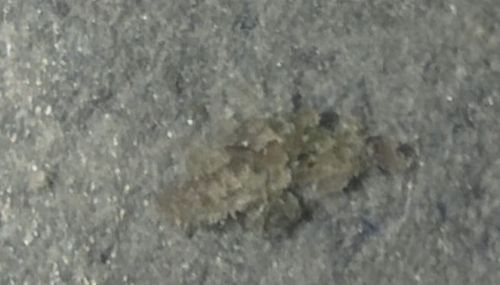
Community identification
Household Casebearer (often nicknamed Plaster Bagworm)
Phereoeca uterella
- Order & Family
- Order: Lepidoptera, Family: Tineidae (Tineid Moths)
- Size
- Case is usually 8 to 15 mm (0.3 to 0.6 inches) in length.
Natural Habitat
Typically found indoors in warm, humid climates; commonly seen climbing plaster walls, in closets, on carpets, or underneath furniture.
Diet & Feeding
Larvae are detritivores that feed on old spider webs, dead insects, shed human hair, pet fur, wool, and lint.
Behavior Patterns
The larva constructs a protective, flattened, spindle-shaped case using silk and debris (sand, paint fragments, dust) from its environment. It drags this 'house' along as it travels and can extend its head from either opening to feed.
Risks & Benefits
Primarily a nuisance pest. They do not bite or sting humans or pets. However, they can cause minor damage to fabrics, rugs, and wool clothing, similar to clothes moths.