
Community identification
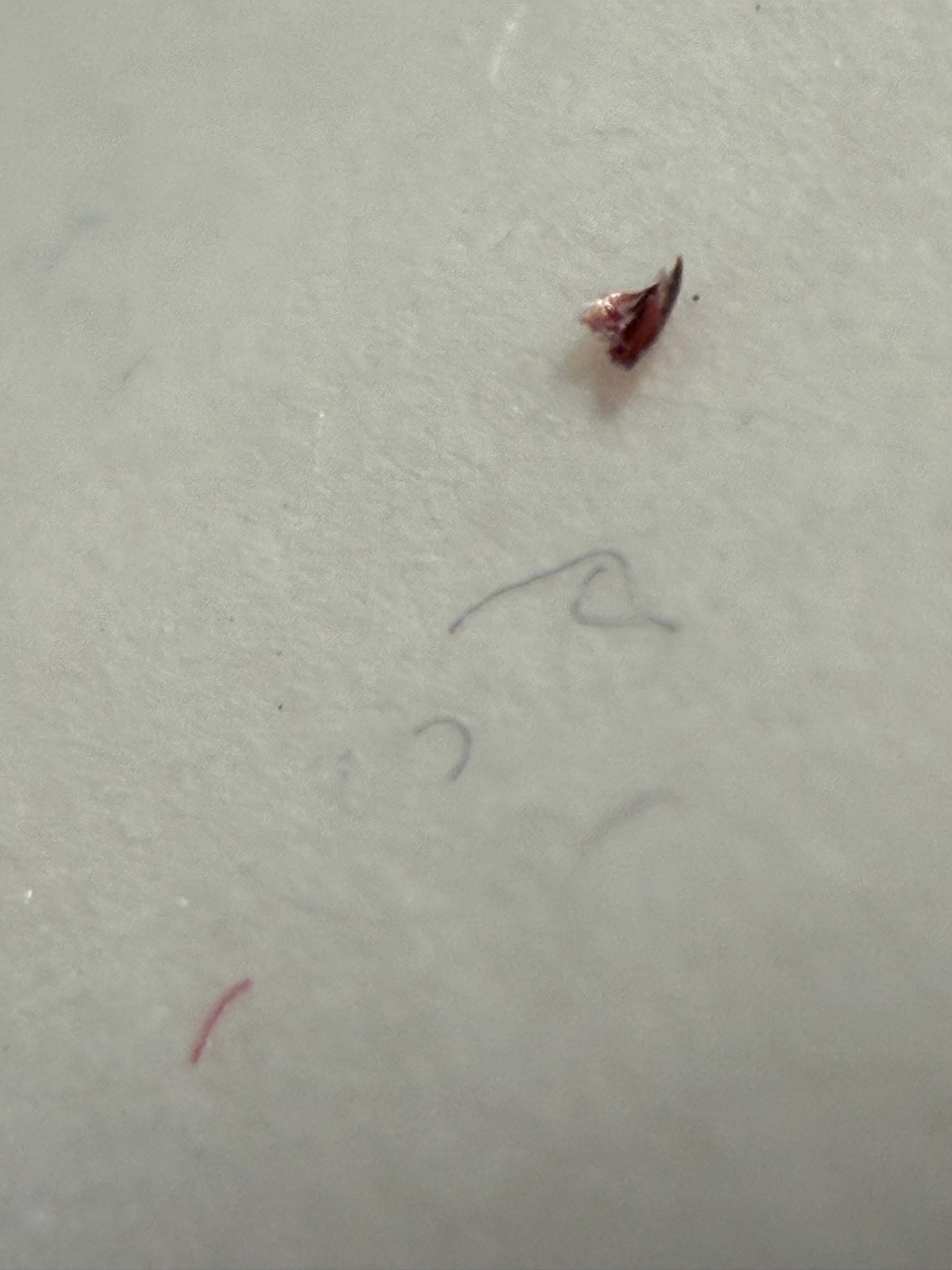
Unidentified small moth or moth-fly fragment
Not reliably identifiable from the image; possibly a clothes moth (Tineidae)
- Order & Family
- Likely Lepidoptera, family Tineidae; identification is uncertain because the specimen appears damaged or shed
- Size
- Adult clothes moths are typically 6–10 mm long, with a wingspan of about 10–15 mm.
Natural Habitat
Clothes moths inhabit dark, undisturbed indoor areas such as closets, carpets, upholstery, and stored textiles.
Diet & Feeding
Larvae consume keratin-containing materials, including wool, fur, feathers, and lint; adults generally do not feed.
Behavior Patterns
Adults are weak fliers and avoid light; larvae hide in fabrics and produce silk cases or webbing while feeding. Several generations may occur annually indoors.
Risks & Benefits
They are not dangerous to people, but larvae can damage natural-fiber clothing and household textiles. Ecologically, moths serve as prey and contribute to decomposition.