
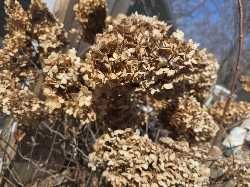
Community identification
Chinese Praying Mantis (Ootheca/Egg Case)
Tenodera sinensis
- Order & Family
- Mantodea; Mantidae
- Size
- Ootheca: 2–4 cm in diameter; Adults: 7–10 cm in length
Natural Habitat
Gardens, meadows, and shrubbery; often attached to twigs or stems of plants like hydrangeas in sunny locations.
Diet & Feeding
Carnivorous; as nymphs and adults, they eat insects like flies, moths, and sometimes other mantises.
Behavior Patterns
The female lays the egg mass (ootheca) in late summer or fall, which hardens to protect the eggs through winter. Hundreds of nymphs emerge in the spring.
Risks & Benefits
Highly beneficial to gardens as generalist predators of pests; poses no risk to humans, though it is an introduced species in North America.