
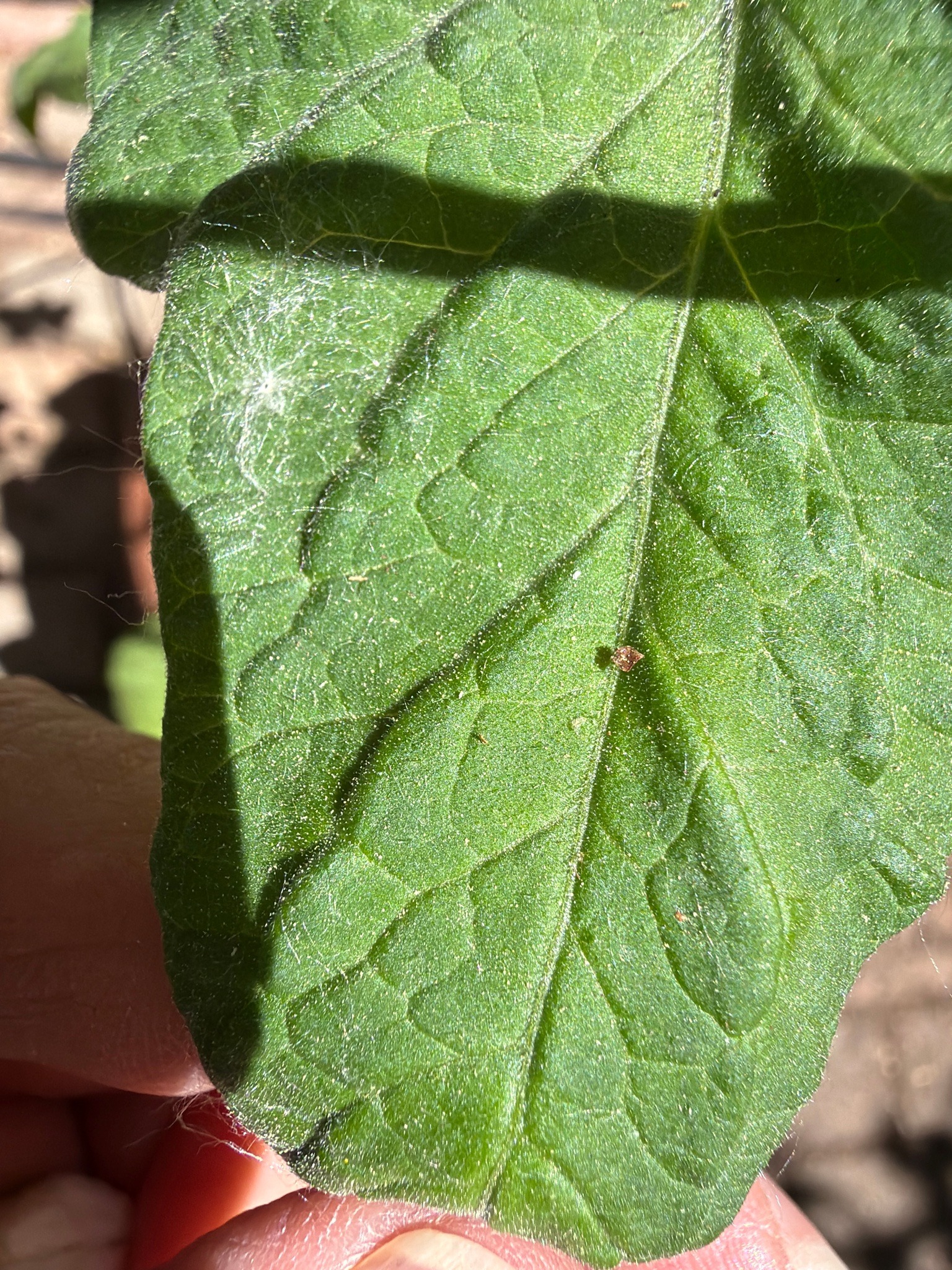
Community identification
Two-spotted spider mite
Tetranychus urticae
- Order & Family
- Trombidiformes: Tetranychidae
- Size
- 0.3 to 0.5 mm in length
Natural Habitat
Found globally on the undersides of leaves in gardens, greenhouses, and agricultural fields, specifically on crops like tomatoes, peppers, and roses.
Diet & Feeding
Herbivorous; they pierce plant cells with their mouthparts and suck out the contents, leaving behind yellow stippling on leaves.
Behavior Patterns
They produce fine silk webbing to protect the colony and help them travel between leaves. They reproduce rapidly in warm, dry conditions, with a life cycle that can be completed in as little as 5-7 days.
Risks & Benefits
Risks: Major agricultural pest that causes leaf drop and can kill plants. Benefits: Serve as a food source for predatory mites and other beneficial insects.