
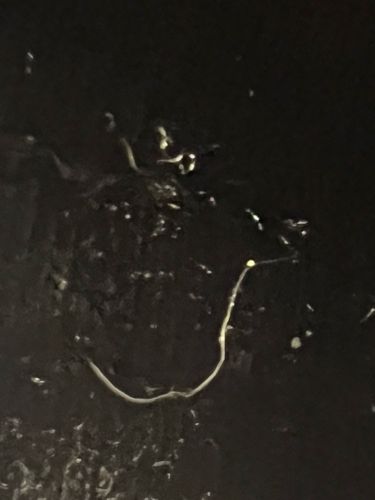
Community identification
Horsehair worm
Gordius sp.
- Order & Family
- Order Gordiacea, Family Gordiidae
- Size
- Typically 4 to 14 inches long, but very thin (1 to 3 millimeters).
Natural Habitat
Freshwater environments like streams, ponds, and rain barrels; sometimes found in puddles or even toilets after an infected insect host dies.
Diet & Feeding
In the larval stage, they are parasites that absorb nutrients from the body cavity of insects like crickets or beetles. Adults do not eat.
Behavior Patterns
Larvae develop inside an insect host. When mature, they influence the host's behavior to find water, where the worm then emerges to mate and lay eggs.
Risks & Benefits
Harmless to humans, pets, and plants. They are beneficial for natural pest control as they reduce populations of crickets, cockroaches, and grasshoppers.