
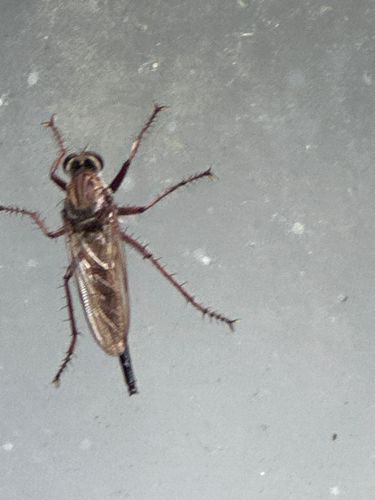
Robber Fly
Asilidae (family)
- Order & Family
- Order: Diptera, Family: Asilidae
- Size
- Typically range from 6 to 30 mm (0.24 to 1.2 inches) in length, but some larger species can reach up to 50 mm (2 inches).
Natural Habitat
Robber flies are found in a wide range of habitats globally, including deserts, grasslands, forests, woodlands, and urban gardens. They often prefer open, sunny areas where they can perch and spot prey, such as on leaves, twigs, rocks, or the ground.
Diet & Feeding
Predatory; they feed on a wide variety of other insects, including flies, bees, wasps, beetles, butterflies, moths, grasshoppers, and even other robber flies. They are generalist predators and will attack almost any insect they can overpower.
Behavior Patterns
Robber flies are ambush predators that wait for prey to come within striking distance, then rapidly pursue and capture them in flight. They use their strong legs, often covered with bristles, to grasp prey. They then inject neurotoxic and proteolytic enzymes through their proboscis to paralyze and digest the prey's internal tissues, which they then suck out. They are typically solitary and active during the day. Mating typically occurs in the air or on vegetation.
Risks & Benefits
Benefits: Robber flies are beneficial in controlling populations of other insects, including some agricultural pests. They play an important role as insect predators in many ecosystems. Risks: They can deliver a painful bite if handled, but they are not aggressive towards humans and typically only bite in self-defense. They do not transmit diseases.