
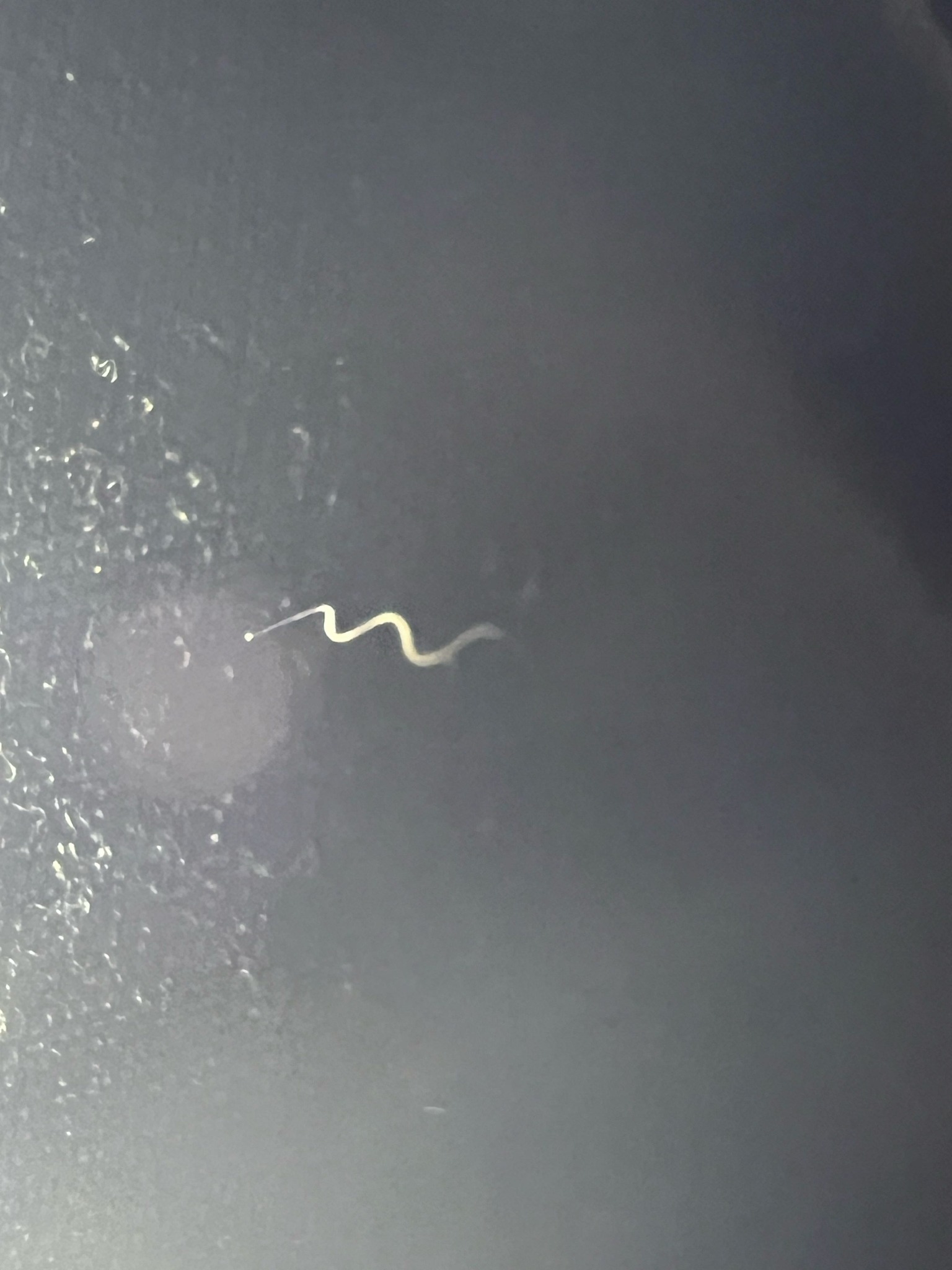
Horsehair worm
Gordius robustus (and related species)
- Order & Family
- Order: Gordiioidea; Family: Gordiidae
- Size
- Typically 10 to 35 centimeters in length, but only 1 to 3 millimeters in width.
Natural Habitat
Freshwater environments such as ponds, streams, puddles, and livestock watering troughs. Adults are aquatic, while larvae are internal parasites.
Diet & Feeding
Larvae are parasites of insects (like crickets, beetles, and cockroaches) and absorb nutrients from the host's body. Non-feeding as adults; they live only to reproduce.
Behavior Patterns
Once fully grown inside a terrestrial host, they manipulate the host's brain to seek water. When the host enters water, the adult worm emerges through the host's body wall to mate. They are often seen twisting in knotted clumps, giving them the nickname 'Gordian knots'.
Risks & Benefits
Harmless to humans, pets, and plants; they cannot infect mammals. They are beneficial for the ecosystem as they help control populations of various insect pests.