
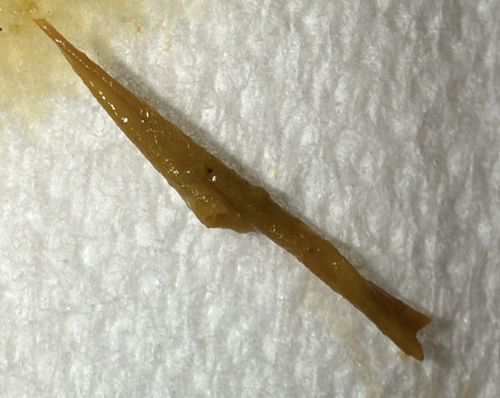
Community identification
Land Planarian (Hammerhead Worm fragment or Soil Flatworm)
Platyhelminthes (Phylum) - likely family Geoplanidae
- Order & Family
- Order: Tricladida; Family: Geoplanidae
- Size
- Varies by species; can range from 1 to over 10 inches (2.5 to 25+ cm) when fully grown, though this specimen appears to be a smaller fragment or juvenile.
Natural Habitat
Damp soil, under logs, rocks, leaf litter, and in gardens; requires high humidity and moisture to survive.
Diet & Feeding
Carnivorous predator; feeds on earthworms, slugs, insect larvae, and sometimes other flatworms.
Behavior Patterns
Nocturnal hunters that track prey using chemoreceptors. They move by gliding over a mucus trail. They can often regenerate from fragments if cut.
Risks & Benefits
Risks: Can be invasive and disruptive to local ecosystems by decimating beneficial earthworm populations. Some species (like Bipalium) produce tetrodotoxin, a neurotoxin, so they should not be handled with bare hands. Benefits: None significant in a garden setting; generally considered a pest to soil health.