
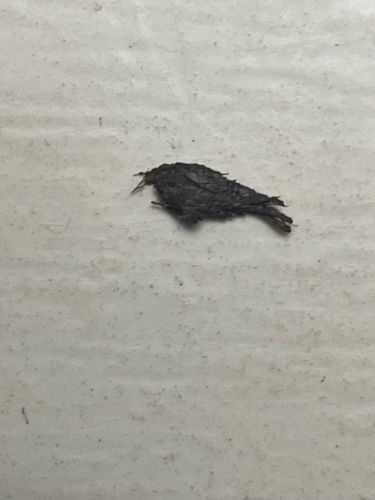
Case-bearing Clothes Moth (Larva)
Tinea pellionella
- Order & Family
- Lepidoptera (Order), Tineidae (Family)
- Size
- Larvae can grow up to 10-15 mm (0.4-0.6 inches) in length, including their case. The adult moths are small, with a wingspan of about 9-16 mm (0.35-0.6 inches).
Natural Habitat
Larvae are typically found in dark, undisturbed areas where suitable food sources are present. This includes closets, attics, storage chests, basements, and any place where clothing, carpets, upholstered furniture, or other natural fiber items are stored. They can also infest materials in ventilation ducts or wall voids.
Diet & Feeding
The larvae primarily feed on natural fibers, especially those of animal origin such as wool, cashmere, fur, felt, silk, and feathers. They can also feed on lint, dust, and dried animal remains. They are attracted to soiled fabrics containing food stains or perspiration.
Behavior Patterns
Case-bearing clothes moth larvae are known for creating a silken case covered with fibers from the materials they consume. They carry this case with them as they move and grow. They are slow-moving and prefer dark, undisturbed areas. The adult moths are poor fliers and are more likely to be seen crawling.
Risks & Benefits
Risks: This insect is a significant household pest that can cause considerable damage to clothing, carpets, tapestries, and other items made of natural fibers. They do not bite or transmit diseases to humans. Benefits: None in a human-centric context, but they are part of the natural decomposition process of natural fibers in eco-systems when not impacting human property.