
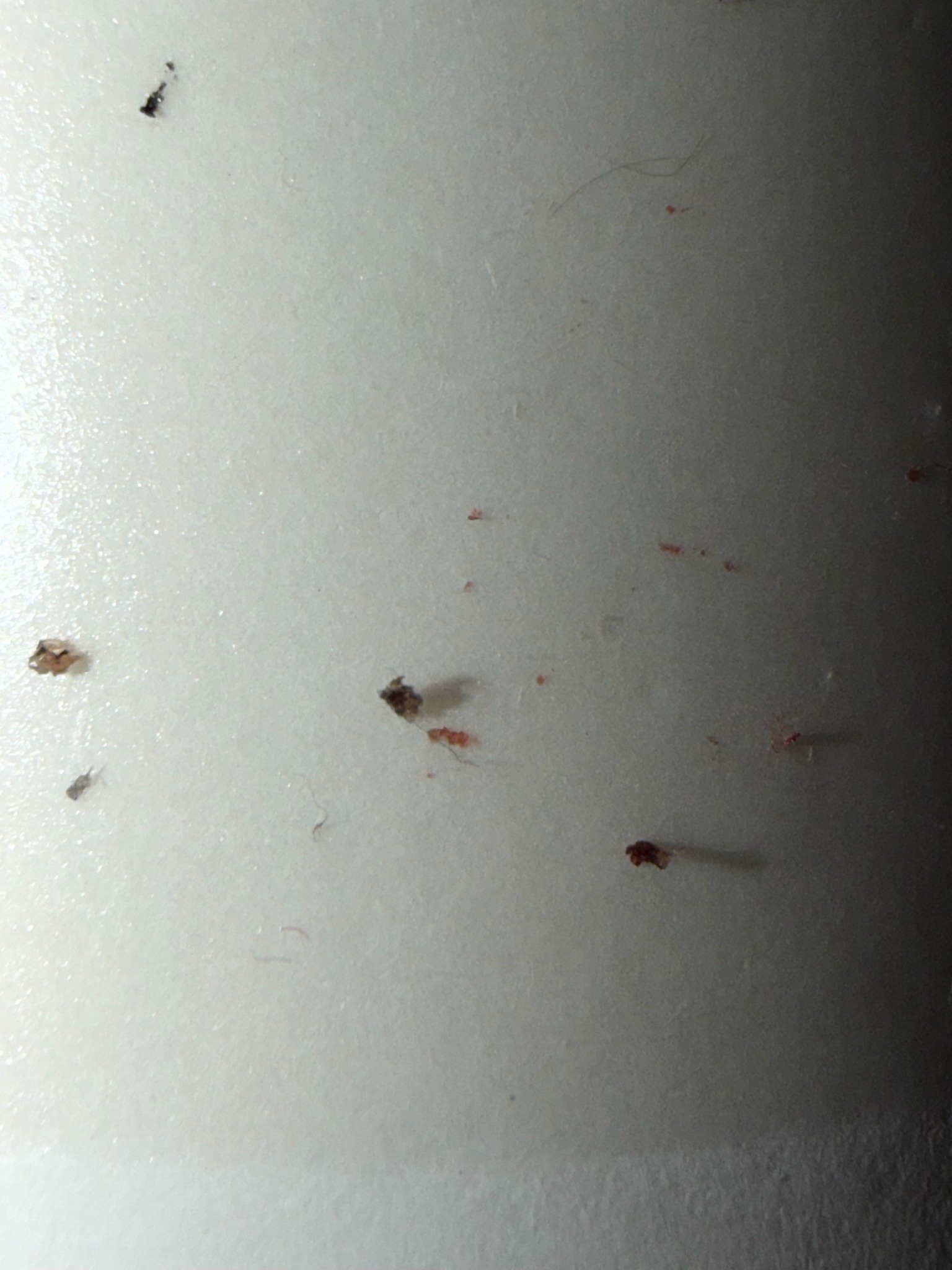
Unidentified tiny arthropod; possibly a springtail or psocid
Collembola or Psocoptera; species cannot be determined from this image
- Order & Family
- Uncertain: Collembola (various families) or Psocoptera (usually Liposcelididae)
- Size
- Typically 0.5–3 mm for springtails or booklice; visible debris and scale make measurement uncertain.
Natural Habitat
Damp indoor areas, window frames, basements, bathrooms, stored materials, and soil or leaf litter. The image is too indistinct for reliable identification.
Diet & Feeding
Springtails graze on fungi, algae, and decaying organic matter; booklice feed on mold, starches, and microscopic residues. Neither group normally bites humans.
Behavior Patterns
Often occur in clusters in humid conditions and may disperse when disturbed; springtails can jump using a forked appendage. Booklice usually crawl and reproduce rapidly in warm, damp environments.
Risks & Benefits
Generally harmless to people, pets, clothing, and buildings; large numbers indicate excess moisture or mold risk. Springtails help decompose organic matter, while booklice can contaminate stored foods or papers.