
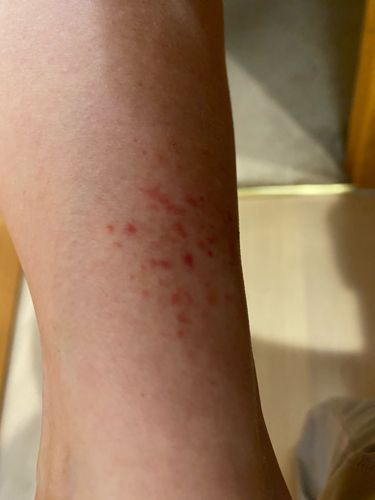
Community identification
Chigger (Harvest Mite)
Trombiculidae (Family)
- Order & Family
- Order: Trombidiformes; Family: Trombiculidae
- Size
- Microscopic (0.15–0.3 mm) in the larval stage; adults reach 1 mm.
Natural Habitat
Tall grass, woodlands, low-lying damp areas, and berry patches.
Diet & Feeding
Larvae feed on skin cells/liquefied tissue of host animals; adults feed on insect eggs and small arthropods.
Behavior Patterns
Larvae latch onto passing hosts, inject digestive enzymes to dissolve skin cells, and feed for several days. They do not burrow. They are most active in late spring and summer.
Risks & Benefits
In humans, they cause intense itching and red welts. They do not typically spread disease in North America but can transmit scrub typhus in parts of Asia. They are ecologically neutral as minor predators of other soil organisms.