
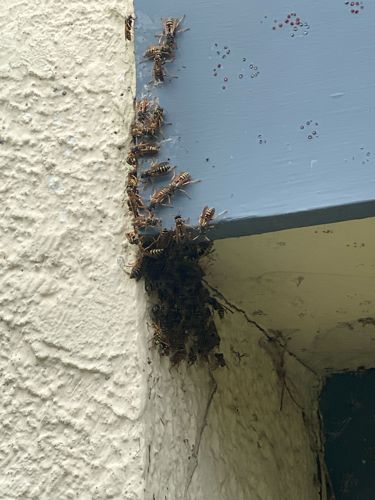
Paper Wasp (likely European Paper Wasp or a similar species)
Polistes spp. (specific species like Polistes dominula for European Paper Wasp)
- Order & Family
- Order: Hymenoptera, Family: Vespidae
- Size
- Typically 0.5 to 1 inch (1.3 to 2.5 cm) in length
Natural Habitat
Paper wasps prefer sheltered locations for building their nests, such as under eaves, in attics, within wall voids, or under deck railings. They are commonly found in suburban and urban areas, as well as natural environments where suitable nesting sites are available.
Diet & Feeding
Adult paper wasps feed on nectar, fruit, and other sweet substances. They also hunt caterpillars, flies, and other insects to feed their larvae, making them beneficial as pest control.
Behavior Patterns
Paper wasps are social insects living in colonies that can number in the thousands. They build nests from wood fibers mixed with saliva, giving them a papery texture. They are known for their defensive behavior, especially when their nest is disturbed. They are most active during the day, foraging for food and nest materials.
Risks & Benefits
Risks: Paper wasps can sting multiple times and their sting is painful. For individuals allergic to wasp venom, stings can cause severe allergic reactions (anaphylaxis) requiring immediate medical attention. Benefits: They are important predators of many garden and agricultural pests, especially caterpillars, helping to control insect populations.