
Community identification
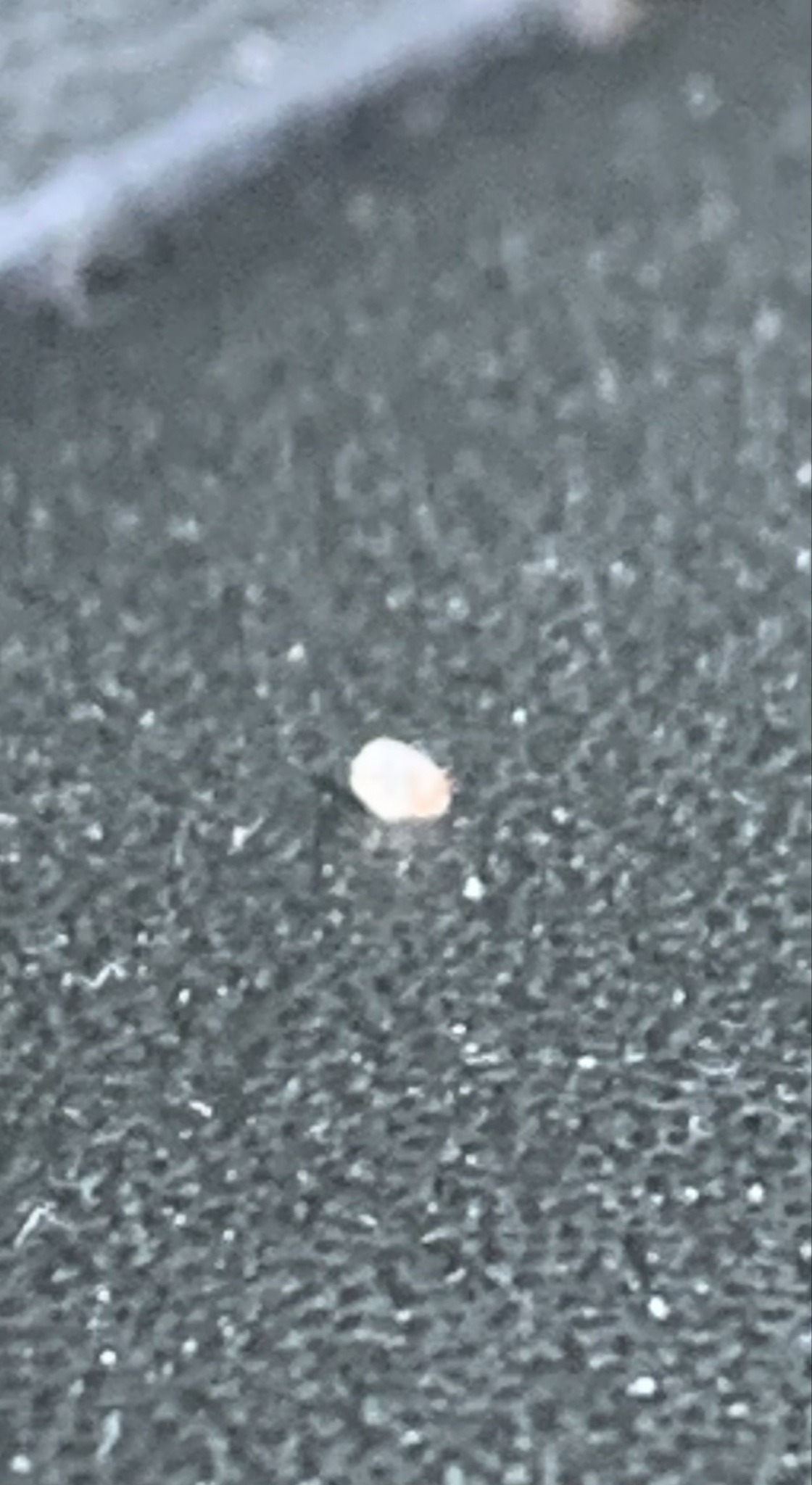
Seed tick (larval tick), identification tentative
Ixodidae sp. (possibly a larval hard tick)
- Order & Family
- Ixodida, Ixodidae
- Size
- Larvae are typically about 0.5–1 mm; nymphs are roughly 1–2 mm, with engorged stages much larger. The image lacks enough detail for precise measurement or confirmation.
Natural Habitat
Leaf litter, grasses, shrubs, animal nests, and areas frequented by wildlife or pets. This specimen appears to be on an indoor or artificial surface after being transported.
Diet & Feeding
Larvae usually take one small blood meal from mammals, birds, or reptiles; nymphs and adults also feed on host blood.
Behavior Patterns
Ticks quest by climbing vegetation and extending their legs to attach to passing hosts. They progress through larval, nymphal, and adult stages, often with one blood meal per stage.
Risks & Benefits
Some species transmit pathogens, including Lyme disease bacteria, anaplasmosis, and other infections; risk depends on species and region. Ticks also serve as food for predators and are part of wildlife parasite communities.