
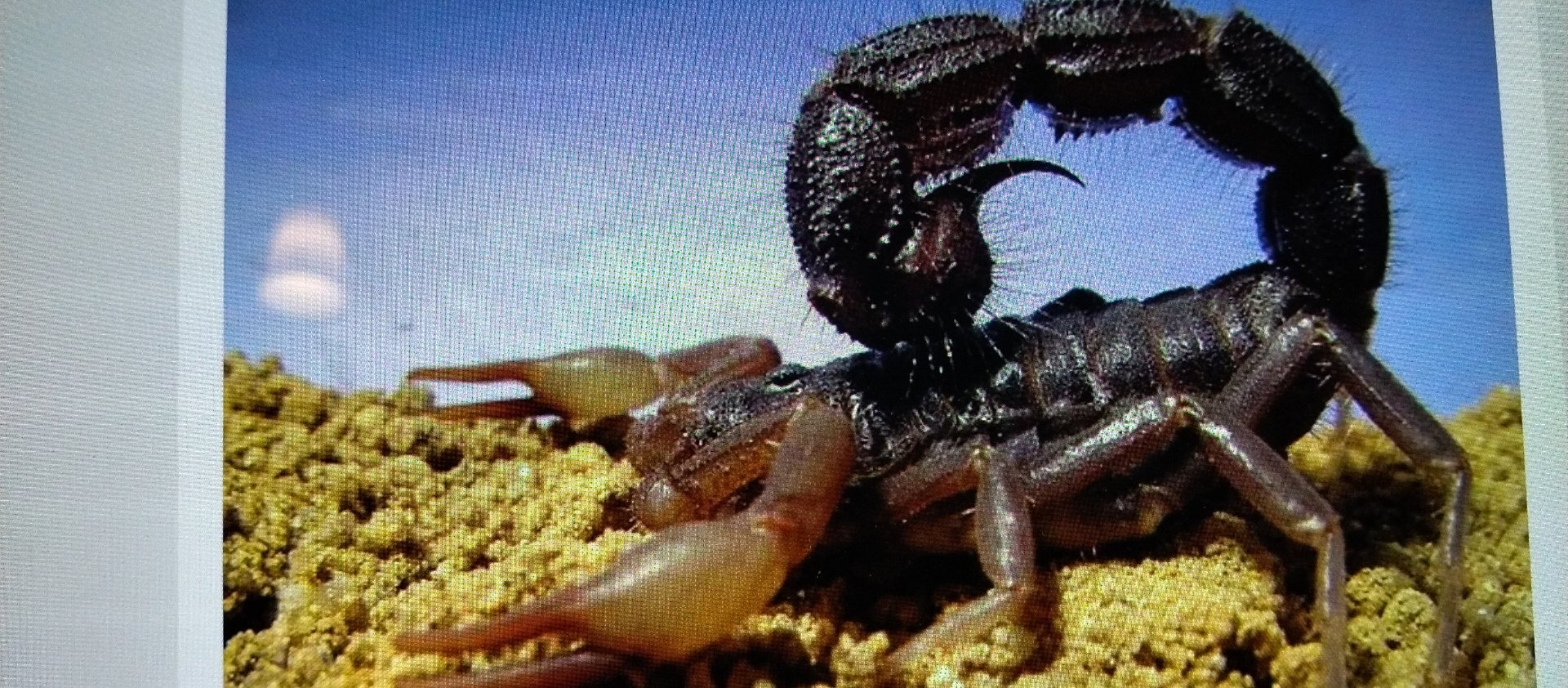
Scorpion (likely Indian black scorpion)
Heterometrus sp., probably Heterometrus swammerdami
- Order & Family
- Scorpiones; Scorpionidae
- Size
- Usually about 8–15 cm long; Heterometrus swammerdami can approach 23 cm, making it one of the world’s largest scorpions.
Natural Habitat
Found in India in warm, humid habitats such as leaf litter, agricultural areas, gardens, rocky ground, and beneath logs or stones. Heterometrus species are often associated with monsoon-season conditions and may be active in August.
Diet & Feeding
Predatory, feeding mainly on insects, spiders, and other arthropods; larger individuals may take small vertebrates. It captures prey with the pincers and injects venom with the stinger.
Behavior Patterns
Mostly nocturnal and solitary, sheltering by day in burrows or under debris. It may raise and arch its tail defensively, as shown, and females give birth to live young that ride on the mother’s back.
Risks & Benefits
Its sting is painful and can cause substantial local effects, but severe or fatal envenomation is uncommon compared with medically important Indian genera such as Hottentotta and Mesobuthus. It benefits ecosystems by controlling arthropod populations; avoid handling it.