
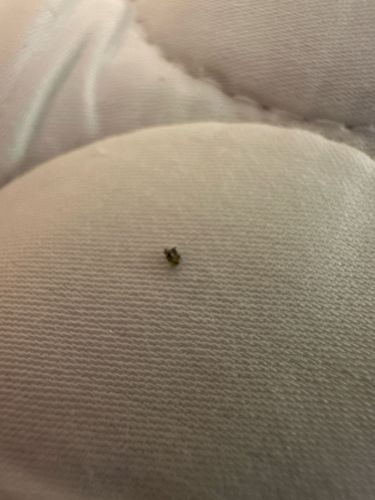
Carpet Beetle (likely a Varied Carpet Beetle or a similar species)
Family Dermestidae (e.g., Anthrenus verbasci for Varied Carpet Beetle, Attagenus unicolor for Black Carpet Beetle)
- Order & Family
- Order: Coleoptera, Family: Dermestidae
- Size
- Larvae: 1.5 - 5 mm; Adults: 2 - 4 mm
Natural Habitat
Indoors, larvae are found in carpets, rugs, upholstered furniture, closets, attics, museums, and anywhere animal-derived products or lint accumulate. Outdoors, they can be found in bird nests, animal carcasses, and dried flowers. Adults are often found near windows as they seek to go outdoors to feed on flowers.
Diet & Feeding
Larvae feed on a wide variety of animal products, including wool, silk, fur, feathers, leather, dead insects, pet food, and even dried plant material. Adults primarily feed on pollen and nectar.
Behavior Patterns
Beetles undergo complete metamorphosis (egg, larva, pupa, adult). Carpet beetle larvae are known to avoid light and prefer dark, undisturbed areas. They are slow-moving and often feign death when disturbed. Adults can fly and are attracted to light.
Risks & Benefits
Risks: Carpet beetles are considered household pests. Their larvae can cause significant damage to natural fibers (wool, silk, fur) in clothing, carpets, and upholstered furniture. They can also damage stored food products. Some people may develop allergic reactions to the larval hairs or shed skins. Benefits: In nature, they play a role in decomposition by feeding on dead animals and plant material.