
Community identification
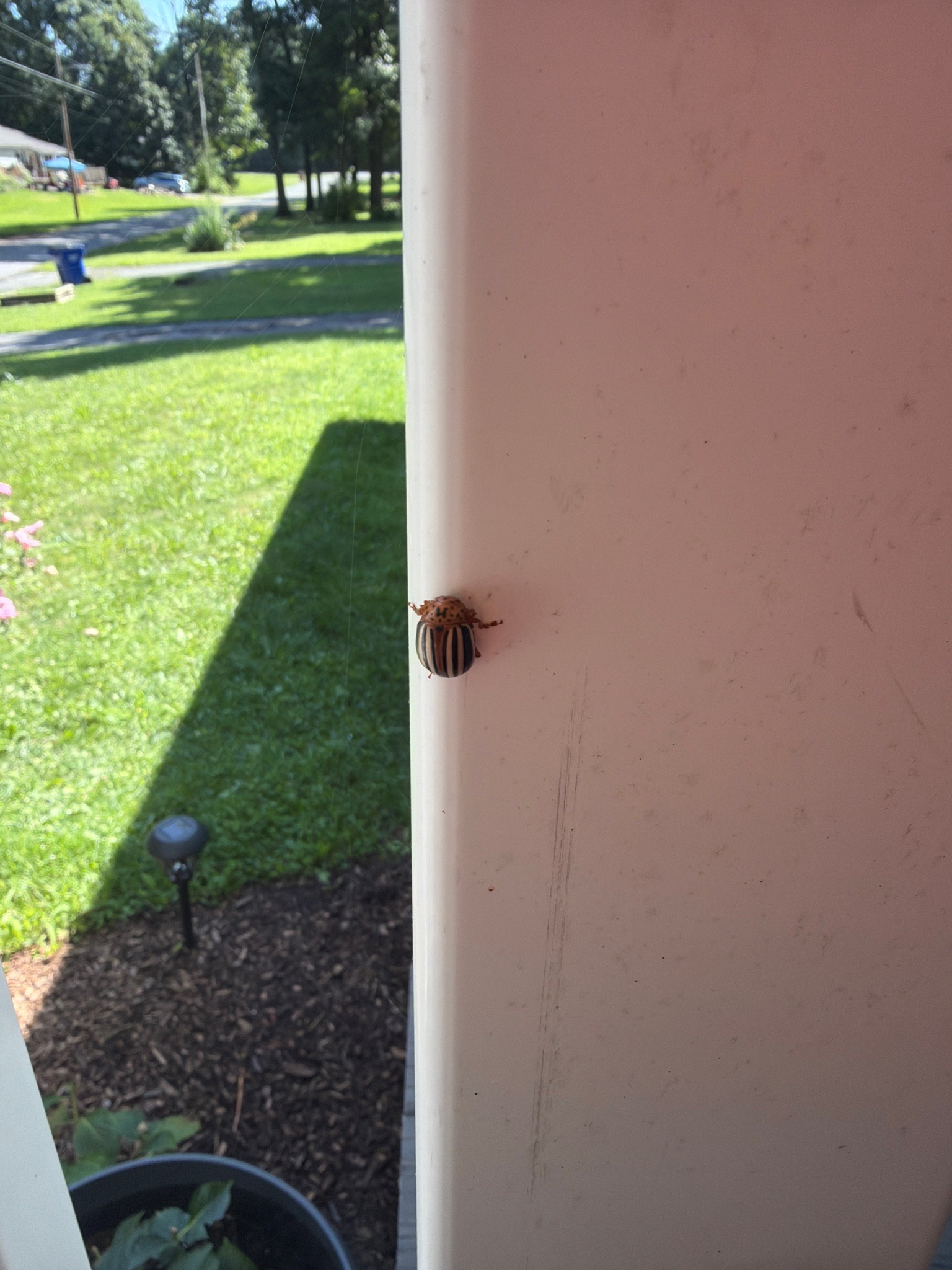
Striped blister beetle (likely)
Meloe spp. (identification uncertain from image)
- Order & Family
- Coleoptera, Meloidae
- Size
- About 1–3 cm long, depending on species; this individual appears roughly 1.5–2 cm.
Natural Habitat
Grasslands, gardens, woodland edges, and other sunny areas; adults often climb vegetation or walls.
Diet & Feeding
Adults commonly feed on flowers, foliage, or pollen. Larvae are specialized predators or parasites of ground-nesting bees and their provisions.
Behavior Patterns
Adults are slow-moving and may release oily, irritating defensive secretions when handled. Larvae undergo hypermetamorphosis and develop through several distinct forms.
Risks & Benefits
Secretions can blister skin and irritate eyes, so avoid touching it. They benefit ecosystems by interacting with native bees and may consume some plant foliage, though they are not usually serious garden pests.