
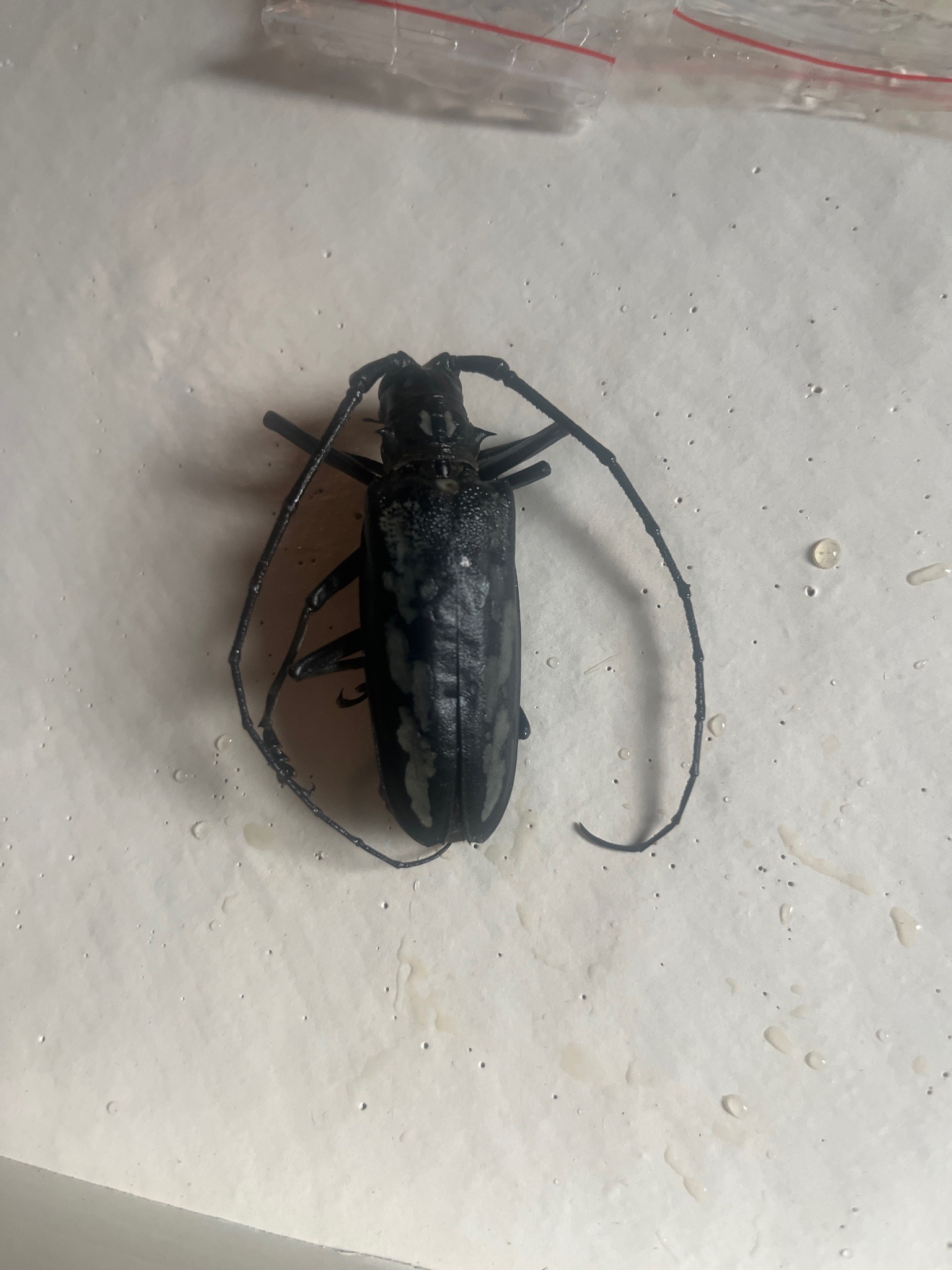
Community identification
Longhorn beetle (likely a prionid root borer)
Prionus sp. (species uncertain from image)
- Order & Family
- Coleoptera; Cerambycidae
- Size
- Typically 25–75 mm long, excluding the antennae; this specimen appears roughly 45–55 mm.
Natural Habitat
Woodlands, forest edges, orchards, and areas with dead or stressed hardwoods; adults may appear around lights at night.
Diet & Feeding
Larvae feed inside roots, stumps, and buried or decaying hardwood, sometimes damaging living trees. Adults generally feed little or may consume sap, foliage, or bark.
Behavior Patterns
Adults are mostly nocturnal and have extremely long, segmented antennae; males often fly to lights. Larvae develop underground for several years before pupating and emerging as adults.
Risks & Benefits
Harmless to people and not venomous, though it can pinch if handled. Larvae help decompose wood but may weaken or kill orchard, landscape, and forest trees.