
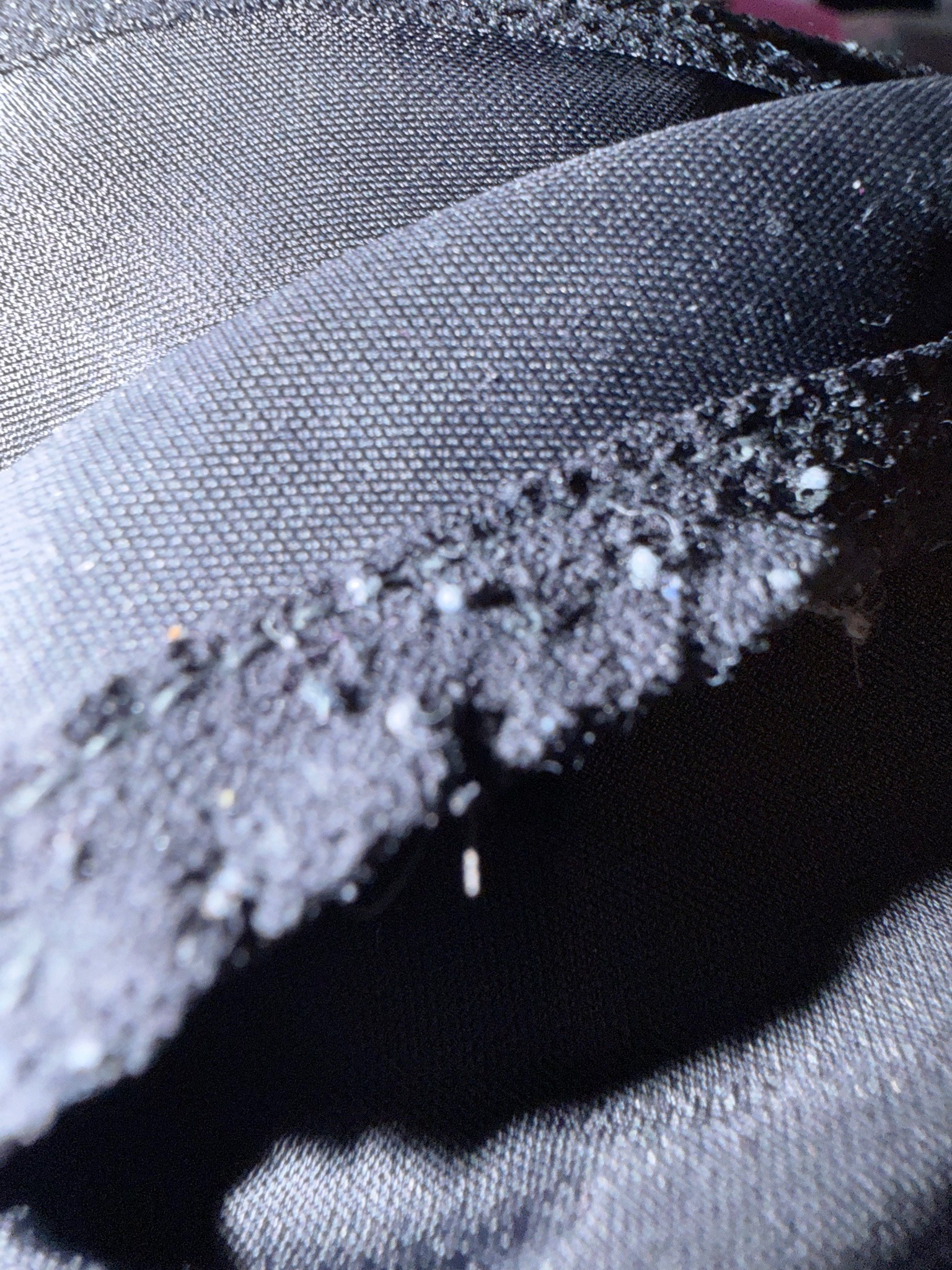
Community identification
Clothes moth larva (likely case-bearing clothes moth)
Tinea pellionella
- Order & Family
- Lepidoptera; family Tineidae
- Size
- Larvae typically 5–10 mm long; adults have a wingspan of about 9–16 mm.
Natural Habitat
Dark, undisturbed indoor areas such as closets, upholstery, carpets, and stored textiles. Larvae often hide in silken cases attached to fabric.
Diet & Feeding
Larvae consume keratin-rich materials, including wool, fur, feathers, hair, and lint; adults generally do not feed. Damage is usually concentrated in concealed, soiled areas.
Behavior Patterns
Larvae avoid light and construct portable cases from silk and fabric fibers, pupating within or near them. Adults are weak fliers and commonly emerge indoors year-round.
Risks & Benefits
They can damage clothing, rugs, upholstery, and natural-fiber goods but do not bite or transmit disease. The image is not definitive; webbing, shed cases, and irregular holes help distinguish them from carpet beetle larvae.