
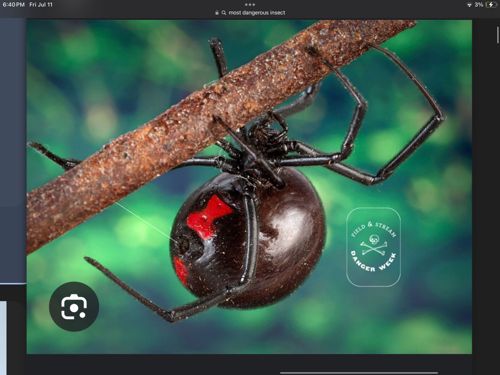
Southern Black Widow
Latrodectus mactans
- Order & Family
- Araneae, Theridiidae
- Size
- Female body length typically 12-16 mm (0.5-0.6 inches), leg span up to 35-40 mm (1.4-1.6 inches). Males are significantly smaller, typically 7-9 mm (0.28-0.35 inches) with much thinner legs.
Natural Habitat
Found in temperate regions, often in dark, undisturbed places like woodpiles, sheds, garages, under rocks, in basements, and hollow logs. They prefer dry and dark environments.
Diet & Feeding
Insects such as flies, mosquitoes, grasshoppers, beetles, and caterpillars. They will also prey on other arachnids and small invertebrates that get caught in their web.
Behavior Patterns
Female black widows are known for their reclusive nature, often found in dark, undisturbed areas. They are nocturnal and build irregular, tangled webs, usually near the ground. They are particularly aggressive when guarding their egg sacs. Males are much smaller and less frequently seen.
Risks & Benefits
Potential Risks: The bite of a female Black Widow spider is venomous and can cause latrodectism, a condition characterized by muscle pain, cramps, nausea, sweating, and tremors. While rarely fatal, especially with modern medical care, it can be severe for children, the elderly, or individuals with pre-existing health conditions. Potential Benefits: They play a role in controlling insect populations, including some pest species.