
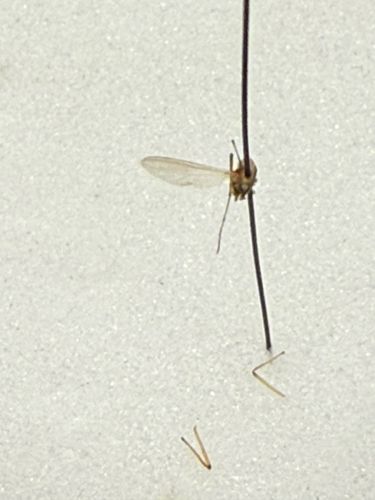
Community identification
Midge
Chironomidae
- Order & Family
- Diptera (Order), Chironomidae (Family)
- Size
- Typically 1-10 mm in length.
Natural Habitat
Found globally, especially near aquatic environments (lakes, ponds, streams, marshes) where their larvae develop.
Diet & Feeding
Adult midges generally do not feed or feed on nectar/honeydew. Larvae, known as 'bloodworms', feed on detritus, algae, and microorganisms in aquatic sediments.
Behavior Patterns
Adults often form large swarms, particularly at dusk, for mating. Larvae are an important food source for fish and other aquatic animals. They undergo complete metamorphosis.
Risks & Benefits
Midges are generally harmless to humans, as adults do not bite. They can be a nuisance due to swarming. Ecologically, midge larvae are vital decomposers and a significant food source in aquatic food webs. They can also be indicators of water quality.