
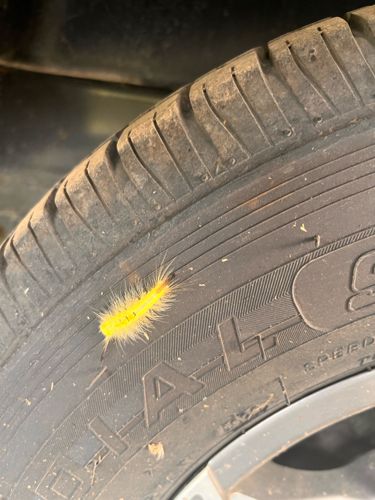
Yellow Woolly Bear Caterpillar
Spilosoma virginica
- Order & Family
- Lepidoptera (Order), Erebidae (Family)
- Size
- Caterpillars typically range from 2.5 to 5 cm (1 to 2 inches) in length.
Natural Habitat
Yellow Woolly Bear Caterpillars are commonly found in gardens, fields, meadows, agricultural areas, and open woodlands where their host plants are abundant.
Diet & Feeding
The Yellow Woolly Bear Caterpillar is polyphagous, meaning it feeds on a wide variety of plants. Common host plants include sunflowers, asters, dandelions, plantains, corn, and other low-growing herbaceous plants.
Behavior Patterns
These caterpillars are often seen actively crawling on host plants. When disturbed, they may curl up or drop from the plant. They are typically solitary. After pupating, they emerge as moths, which are usually nocturnal.
Risks & Benefits
Risks: While generally harmless, the urticating hairs on woolly bear caterpillars can cause skin irritation, itching, or a mild rash in sensitive individuals if handled directly. Benefits: As part of the food chain, they serve as a food source for various predators. Moths are pollinators, though the adult moth of this species is not a primary pollinator.