
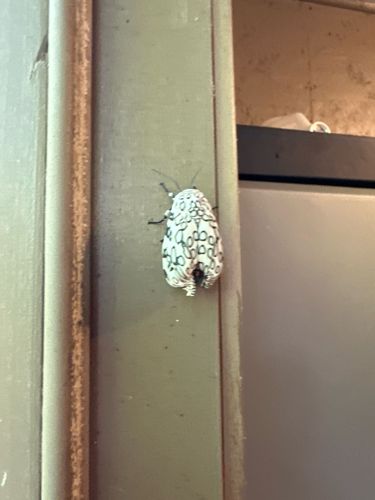
Leopard Moth
Zeuzera pyrina
- Order & Family
- Lepidoptera (Moths and Butterflies), Cossidae (Carpenter or Goat Moths)
- Size
- Wingspan typically ranges from 30-70 mm (1.2-2.8 inches). Females are generally larger than males.
Natural Habitat
Wooded areas, urban and suburban environments with host trees, orchards, and nurseries. They are found wherever their host trees are present.
Diet & Feeding
Larvae (caterpillars) are xylophagous, meaning they bore into and feed on the wood of various deciduous trees and shrubs, including maple, elm, ash, oak, birch, apple, and cherry. Adults do not feed.
Behavior Patterns
Adults are nocturnal and attracted to lights. They are univoltine (one generation per year) in northern regions and multivoltine in southern regions. Females lay eggs on host plant bark, and larvae bore into the heartwood to feed, making them internal feeders. Larvae can take 2-3 years to develop. Pupation occurs inside the tree.
Risks & Benefits
Potential Risks: The larvae can cause significant damage to shade trees, ornamental trees, and fruit trees, leading to weakened branches, stem breakage, and sometimes tree death, particularly in young or stressed trees. They are considered a serious pest in some regions. Potential Benefits: In healthy, established ecosystems, they can be part of the natural breakdown of wood and provide food for insectivorous birds and other predators, though their pest status often outweighs ecological benefits.