
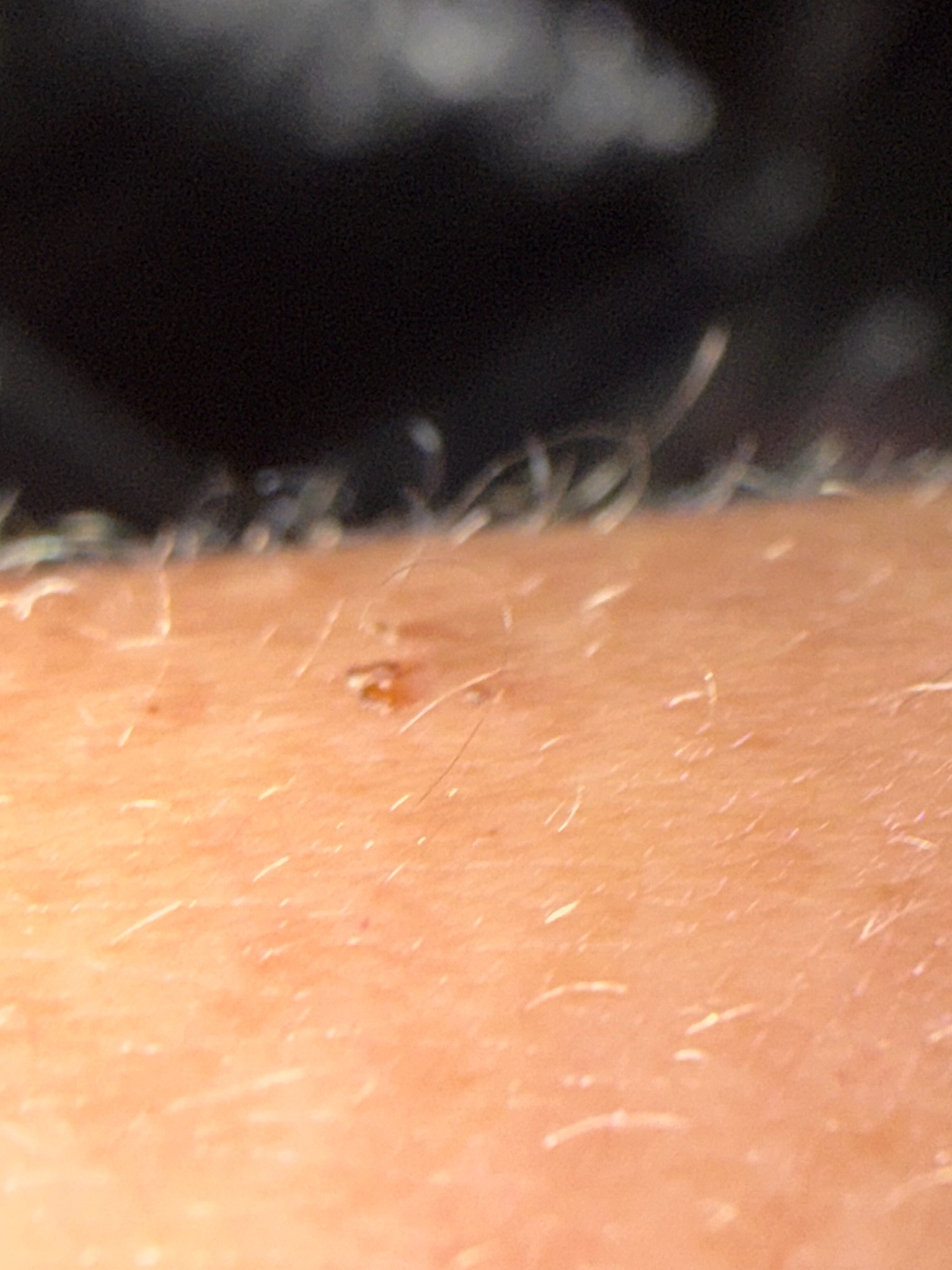
Community identification
Lone Star Tick (Nymph stage)
Amblyomma americanum
- Order & Family
- Order Ixodida, Family Ixodidae
- Size
- Nymphs are about 1 mm to 1.5 mm in diameter, often described as the size of a poppy seed.
Natural Habitat
Found in wooded areas with thick undergrowth, tall grass, and areas between wetlands and forests, mostly in the Southeast and Eastern United States.
Diet & Feeding
Obligate hematophages; they feed exclusively on the blood of mammalian hosts including deer, turkeys, and humans.
Behavior Patterns
Questing behavior involves clinging to vegetation and waiting for a host to brush by. They are known for being more aggressive than other tick species, actively crawling toward a nearby host.
Risks & Benefits
Risks include the transmission of Ehrlichiosis, Heartland virus, and Bourbon virus. Bites are specifically linked to the development of Alpha-gal syndrome, a serious red meat allergy. There are no known benefits to humans.