
Community identification
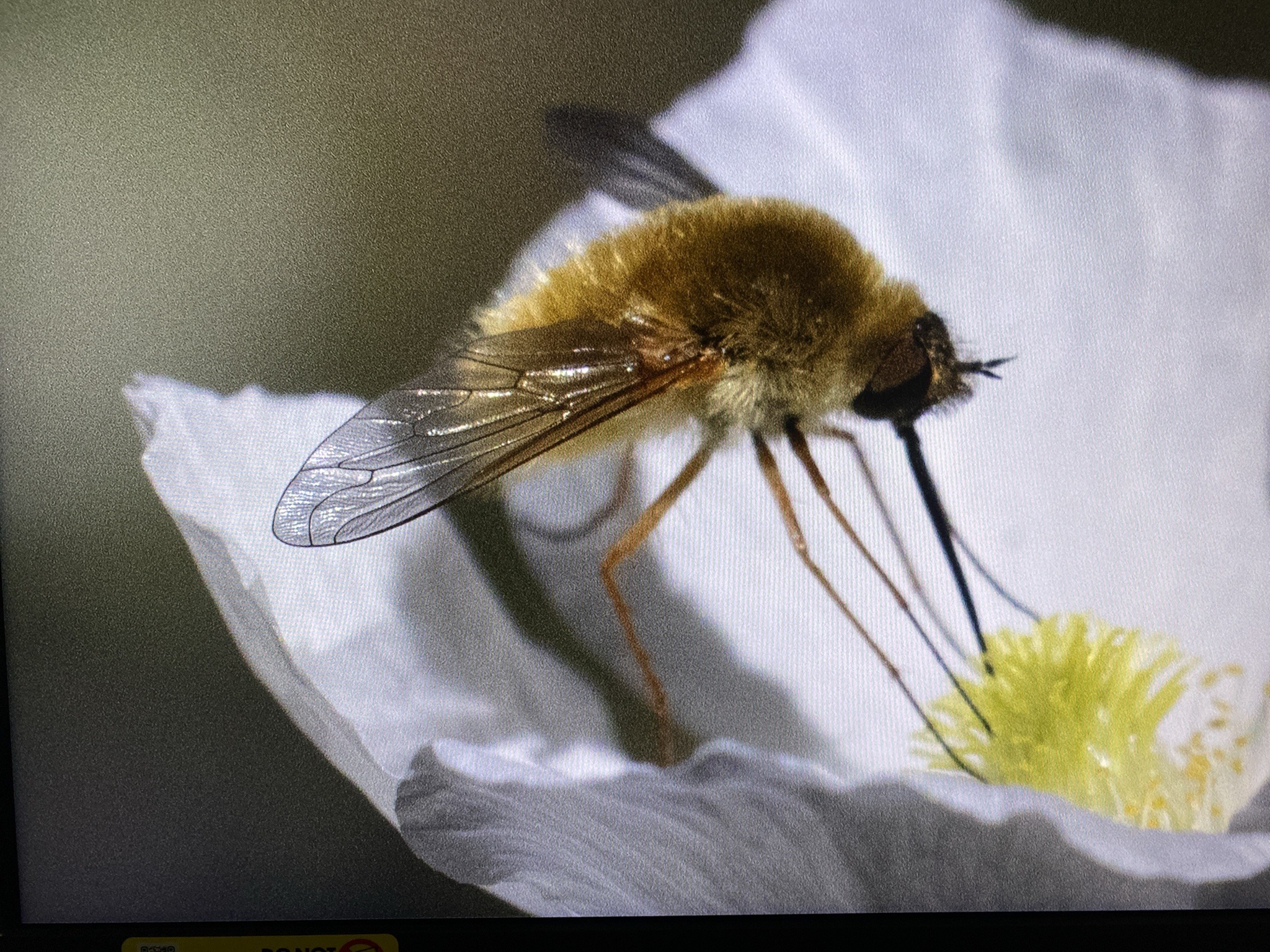
Large Bee Fly
Bombylius major
- Order & Family
- Diptera: Bombyliidae
- Size
- 8 to 12 mm in body length
Natural Habitat
Gardens, woodland edges, and sunny meadows across the Northern Hemisphere
Diet & Feeding
Adults feed on flower nectar using a long proboscis; larvae are parasitoids of ground-nesting bees and wasps
Behavior Patterns
They are expert hoverers that mimic bees for protection. Females flick their eggs into the burrows of solitary bees where the larvae then feed on the host's offspring and pollen stores.
Risks & Benefits
Harmless to humans as they do not sting or bite despite their needle-like proboscis; they are beneficial pollinators for many early spring flowers.