
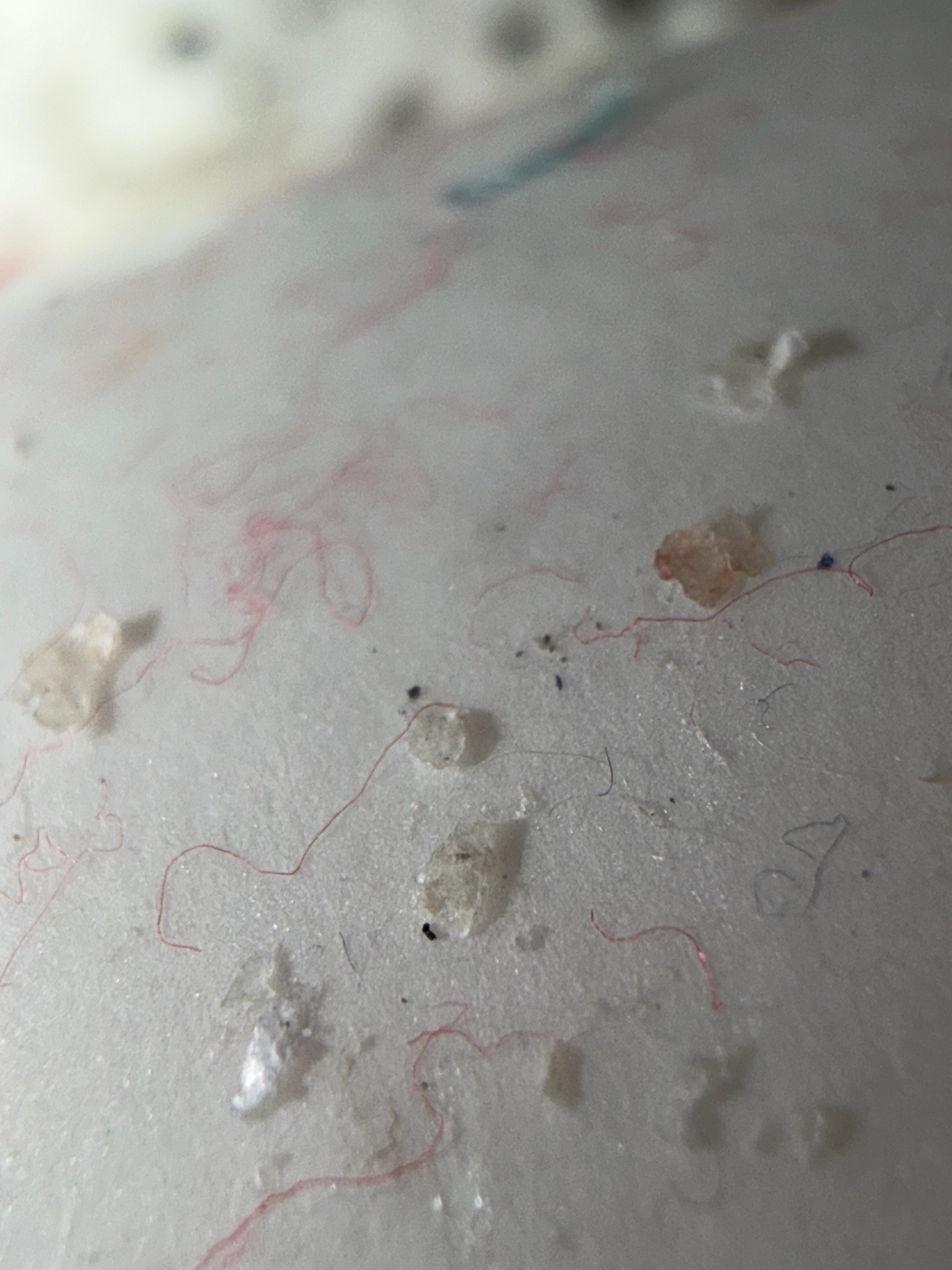
Community identification
Booklouse (psocid)
Likely Liposcelis spp.
- Order & Family
- Psocodea, family Liposcelididae
- Size
- About 0.5–2 mm long; the pictured specimens appear extremely small and pale.
Natural Habitat
Humid indoor areas, especially stored food, cupboards, books, paper, and moldy materials.
Diet & Feeding
Feeds mainly on mold, fungi, spores, algae, and organic residues rather than human tissue or blood.
Behavior Patterns
Wingless, soft-bodied, and slow-moving; populations increase in warm, damp conditions. Many species reproduce rapidly, sometimes without males.
Risks & Benefits
Generally harmless to people, pets, and buildings, though large infestations can contaminate stored foods and damage collections. Their presence often indicates excess moisture or mold.