
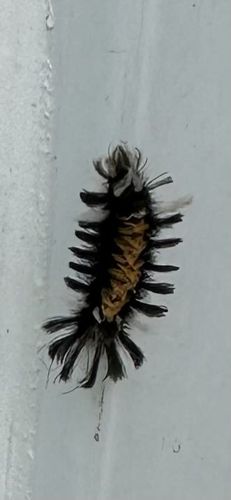
Woolly Bear Caterpillar (specifically, likely a Tiger Moth caterpillar species, such as Isabella Tiger Moth)
Pyrrharctia isabella (for the Isabella Tiger Moth, a very common woolly bear species)
- Order & Family
- Order: Lepidoptera, Family: Erebidae (formerly Arctiidae)
- Size
- Larvae (caterpillars) typically range from 1 to 2.5 inches (2.5 to 6.3 cm) in length. Adult moths have a wingspan of about 1.5 to 2.5 inches (3.8 to 6.3 cm).
Natural Habitat
Commonly found in gardens, fields, forests, meadows, roadsides, and other temperate environments where suitable host plants are abundant. They prefer areas with good ground cover.
Diet & Feeding
Herbivorous. They feed on a wide variety of low-growing plants, including grasses, dandelions, plantain, clover, and other herbaceous vegetation. They are not typically considered agricultural pests.
Behavior Patterns
Woolly bear caterpillars are known for their ability to survive freezing temperatures by producing a cryoprotectant in their bodies. They typically overwinter as caterpillars and then pupate in the spring. When disturbed, they may curl up into a tight ball as a defensive mechanism. They are generally solitary. Their hairy bodies offer protection from predators.
Risks & Benefits
Potential Risks: The hairs (setae) on some woolly bear caterpillars, while generally not venomous, can cause mild skin irritation for some sensitive individuals if handled frequently. They are not known to be pests in homes or gardens in a significant way. Potential Benefits: They contribute to the ecosystem as herbivores, converting plant matter and serving as a food source for various predators (birds, small mammals) during their life cycle. The adult moths are often pollinators, though not highly specialized.