
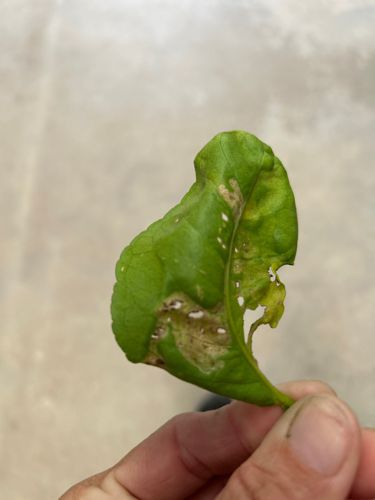
Leafminer (general)
Various (e.g., Liriomyza trifolii, Phytomyza horticola, Tuta absoluta)
- Order & Family
- Various (Diptera, Lepidoptera, Coleoptera, Hymenoptera); Families include Agromyzidae (flies), Gracillariidae (moths), Nepticulidae (moths), Curculionidae (weevils), etc.
- Size
- Larvae sizes vary widely from less than 1 mm to several mm, depending on the species and instar. Adult insects (flies, moths, beetles) range from a few millimeters to over a centimeter.
Natural Habitat
Leafminers are found wherever their host plants grow. This includes agricultural fields, gardens, greenhouses, forests, and wild areas. The larvae live inside the leaves of the host plant.
Diet & Feeding
The larvae of leafminers feed exclusively on the parenchymal cells between the epidermal layers of plant leaves. They consume the chlorophyll and other cellular contents, creating characteristic feeding tunnels or blotches. Each species of leafminer typically specializes on certain host plants or plant families.
Behavior Patterns
Leafminers are the larvae of various insects (flies, moths, beetles, sawflies) that feed within the layers of plant leaves. The damage seen, often described as 'mines,' are tunnels or blotches created as the larva eats its way through the leaf tissue. The specific pattern of the mine can help identify the type of leafminer. Adults lay eggs on or in the leaf surface. Once hatched, the larvae bore into the leaf and begin feeding. They complete their development inside the leaf, pupating either within the leaf, on the plant, or in the soil, depending on the species.
Risks & Benefits
Risks: Leafminers are primarily considered pests in agriculture and horticulture. Their feeding can reduce the photosynthetic capacity of leaves, leading to stunted growth, reduced yields, and aesthetic damage (especially in ornamental plants). Heavy infestations can cause premature leaf drop. While generally not lethal to mature plants, young plants can be severely impacted. Benefits: In natural ecosystems, leafminers are part of the food web, serving as a food source for parasitic wasps and predatory insects. Some species are used in biological control of invasive weeds.