
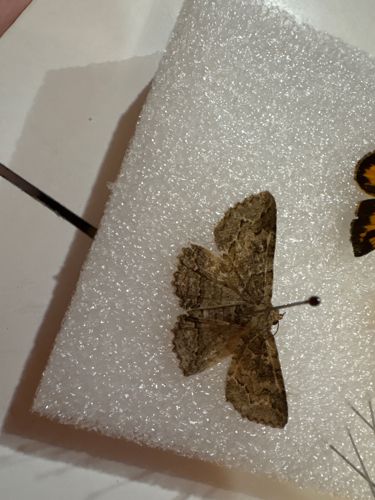
Possibly a Geometrid Moth (e.g., Angle Shades Moth or a similar geometric moth species)
Difficult to determine exact species without clearer identifying features and location, but likely within the family Geometridae, possibly a species like *Phlogophora meticulosa* (Angle Shades Moth) or another camouflaged geometrid.
- Order & Family
- Order: Lepidoptera, Family: Geometridae
- Size
- Most geometrid moths have a wingspan ranging from 1.5 cm to 5 cm (0.6 to 2 inches), though some can be smaller or larger. The moth in the image appears to be in this general range.
Natural Habitat
Geometridae moths are found in a wide range of habitats, including woodlands, forests, gardens, grasslands, and urban areas, wherever their host plants are present.
Diet & Feeding
Adult moths typically feed on nectar from flowers, tree sap, or rotting fruit. The larvae (caterpillars) are herbivorous and consume leaves of various host plants. The specific host plants depend on the species.
Behavior Patterns
Moths are typically nocturnal or crepuscular (active at dusk/dawn), though some species are diurnal. They undergo complete metamorphosis with four life stages: egg, larva (caterpillar), pupa, and adult. The adults are primarily focused on reproduction and feeding on nectar. Their intricate camouflage helps them blend into their surroundings during rest.
Risks & Benefits
Generally, geometrid moths pose no direct risk to humans. Some caterpillar species can be considered agricultural or forestry pests if they feed on commercially valuable plants in large numbers. Ecologically, they are important pollinators for various plants and serve as a food source for birds, bats, and other insects.