
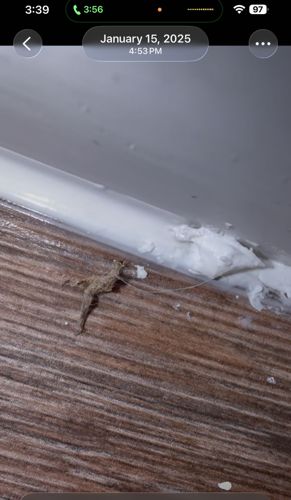
Community identification
Household Casebearer
Phereoeca uterella
- Order & Family
- Order Lepidoptera, Family Tineidae
- Size
- Case length is usually 8mm to 14mm.
Natural Habitat
Typically found inside residential buildings, particularly in high-humidity areas like bathrooms and kitchens, or on walls and floors.
Diet & Feeding
Larvae feed on spider webs, fallen hair, shed skin cells, and natural fibers like wool or silk.
Behavior Patterns
The larva constructs a protective, flattened, spindle-shaped case from silk and debris (dust, sand, hair). It can poke its head out of either end of the case to move or feed. It undergoes complete metamorphosis within the case.
Risks & Benefits
Non-venomous and harmless to humans and pets. They can occasionally damage natural fiber textiles, but are primarily considered a nuisance pest and an indicator of indoor humidity or accumulated dust and spider webs.