
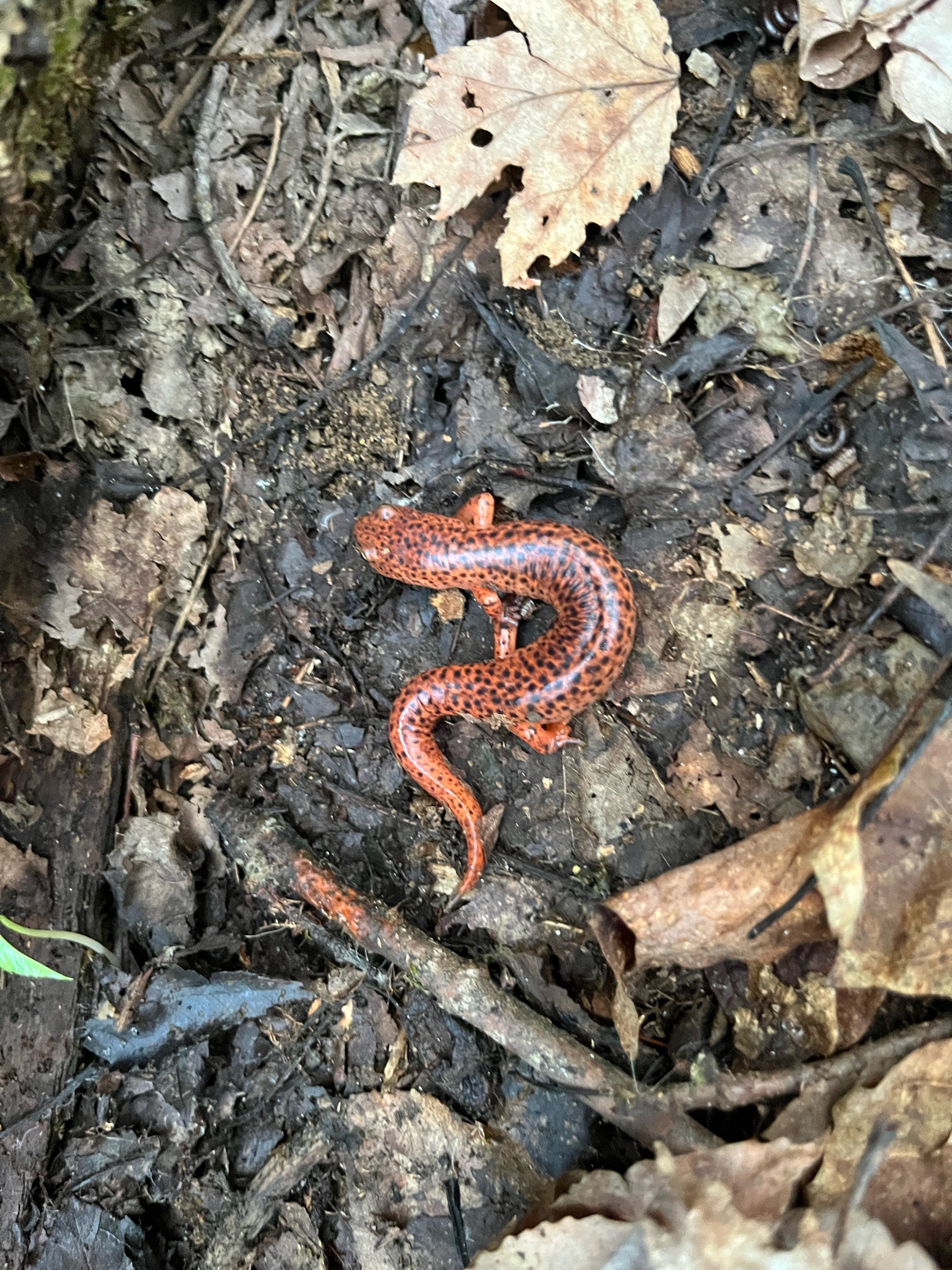
Community identification
Red Salamander
Pseudotriton ruber
- Order & Family
- Caudata; Plethodontidae
- Size
- 3.9 to 7.1 inches (10 to 18 cm) in length
Natural Habitat
Found near cool, clear streams, springs, and seepages in deciduous or mixed forests; often hides under leaf litter, logs, or rocks.
Diet & Feeding
Carnivorous; feeds on insects, earthworms, spiders, snails, and even smaller salamanders.
Behavior Patterns
Primarily nocturnal and semi-aquatic. They are lungless salamanders that breathe through their skin and require moist environments. They have a long larval stage (2–3 years) before metamorphosing into adults.
Risks & Benefits
Benefits the ecosystem by controlling insect populations. They produce mild skin toxins that can be irritating if handled; they are harmless to humans but should not be touched to protect their permeable skin and prevent stress or toxin transfer.