
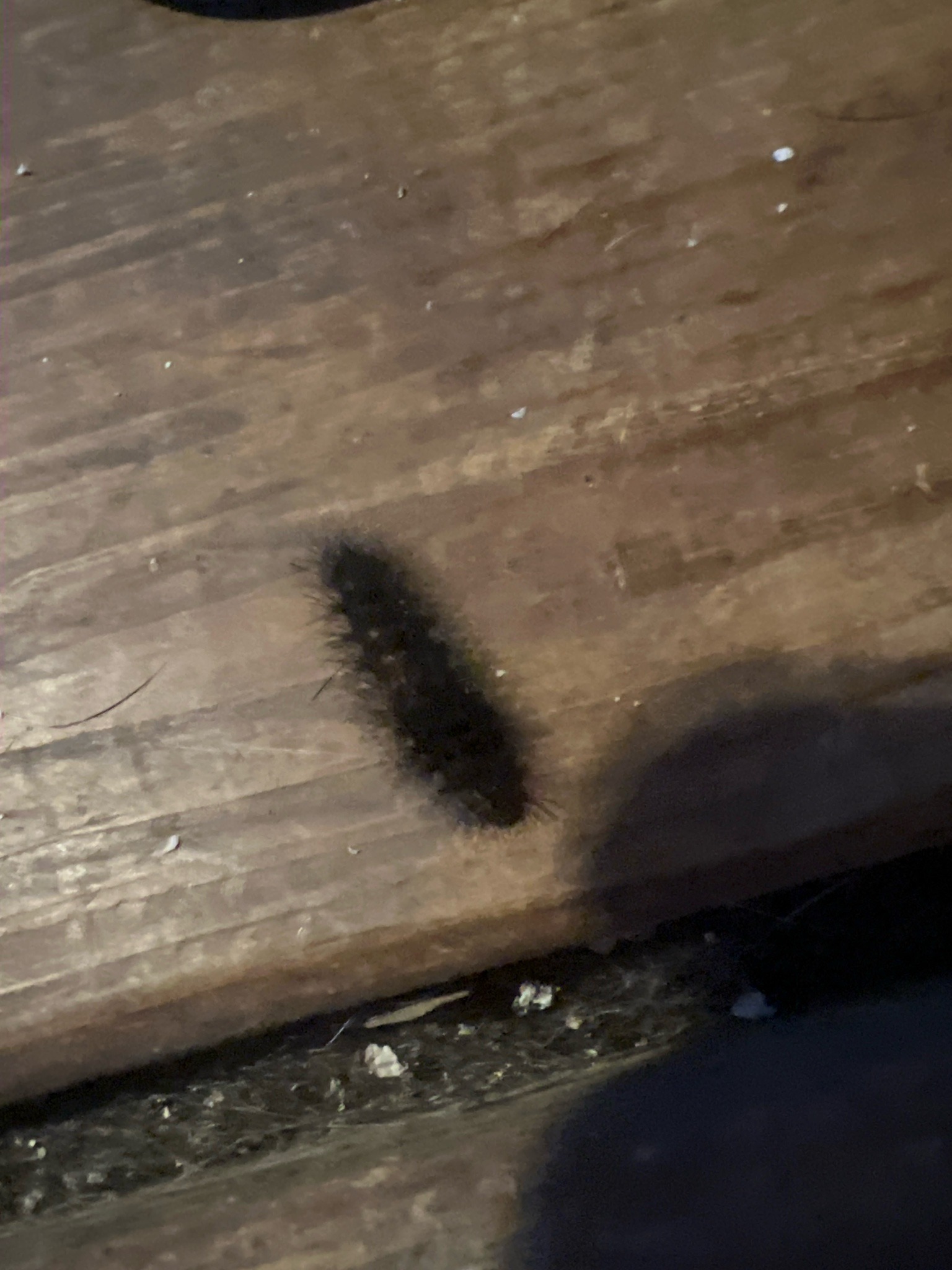
Community identification
Giant Leopard Moth Caterpillar
Hypercompe scribonia
- Order & Family
- Lepidoptera: Erebidae
- Size
- Up to 3 inches (7.6 cm) in length
Natural Habitat
Found in forests, fields, and gardens throughout North America
Diet & Feeding
Broadleaf plants including dandelion, plantain, violets, honeysuckle, and various deciduous trees
Behavior Patterns
Active in late summer and fall; they over-winter as caterpillars and are known to curl into a tight ball when threatened, revealing red rings between their segments
Risks & Benefits
Unlike many fuzzy caterpillars, they are generally not venomous and do not sting, but their stiff hairs can cause mild skin irritation for sensitive individuals; they benefit the ecosystem as pollinators in their adult moth stage