
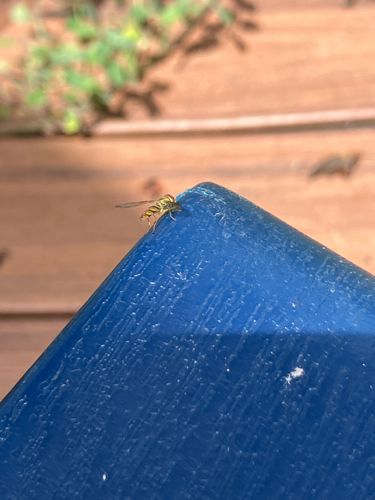
Hoverfly
Syrphidae (family)
- Order & Family
- Order: Diptera, Family: Syrphidae
- Size
- Typically range from 4 mm to 25 mm (0.16 to 1 inch) in length.
Natural Habitat
Hoverflies are found in a wide variety of habitats where flowering plants and their prey (like aphids) are abundant. This includes gardens, meadows, woodlands, parks, agricultural fields, and urban areas. They are common near flowering vegetation.
Diet & Feeding
Adult hoverflies primarily feed on nectar and pollen from flowers. The larvae of many species are predatory, feeding on aphids, thrips, scale insects, and other small, soft-bodied plant pests. Some larvae are scavengers, feeding on decaying organic matter, while others are internal parasites of other insects.
Behavior Patterns
Hoverflies are known for their ability to hover precisely in the air, similar to hummingbirds. Many species mimic the appearance of bees or wasps to deter predators. Adults are often seen visiting flowers for nectar and pollen. Larvae of predatory species are typically found on plants infested with aphids or other soft-bodied insects, actively feeding.
Risks & Benefits
Hoverflies pose no direct risk to humans as they do not sting or bite. They are highly beneficial insects, particularly in agriculture and gardening, as effective biological control agents against common pests like aphids. As adults, they are important pollinators of many plants, contributing to ecosystem health and crop production.