
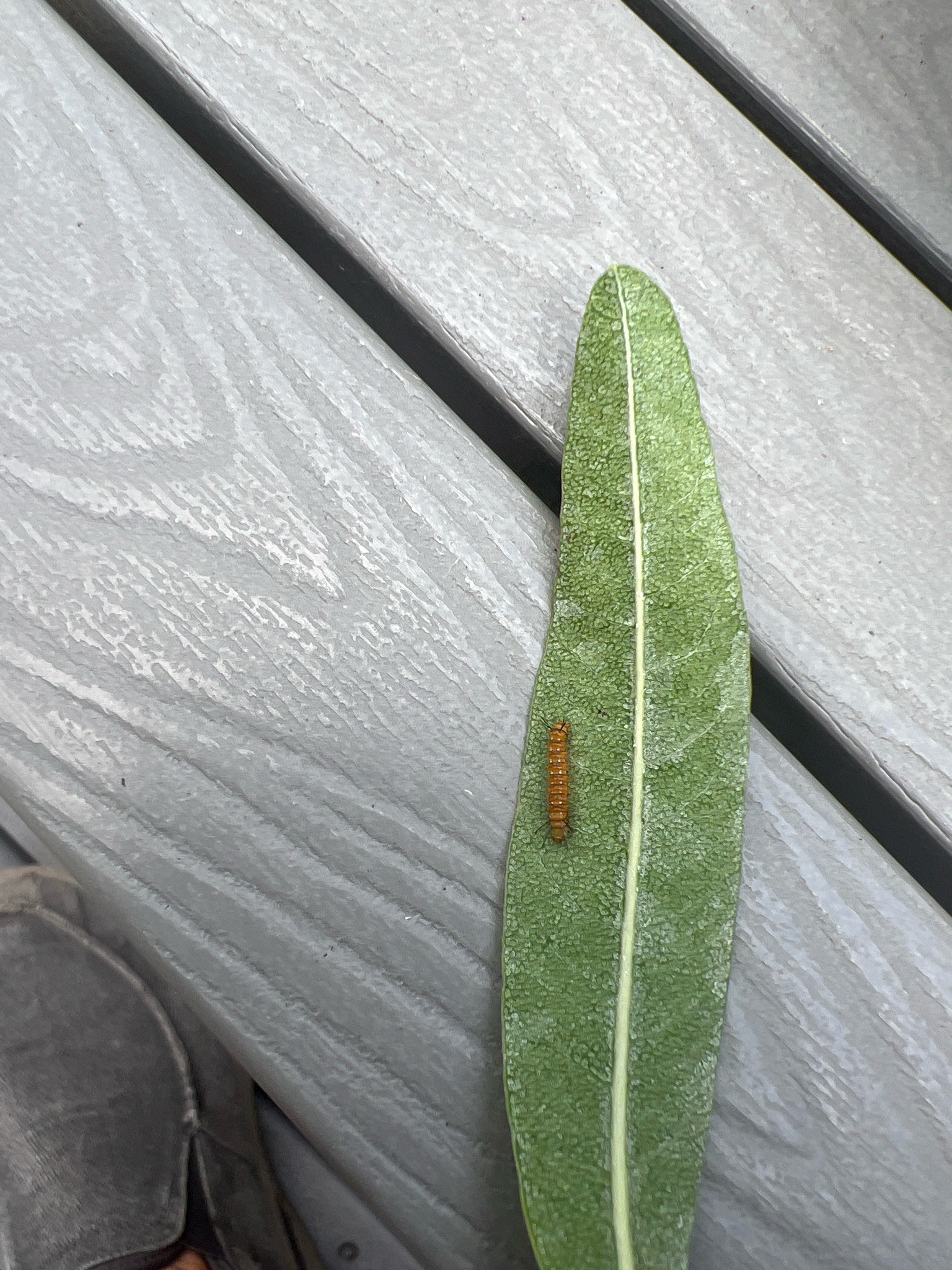
Oleander Caterpillar
Syntomeida epilais
- Order & Family
- Lepidoptera: Erebidae
- Size
- Late-stage larvae reach approximately 1 to 1.5 inches (25-40 mm) in length.
Natural Habitat
Coastal areas, gardens, and landscapes throughout Florida, the Caribbean, and Central America where oleander plants are grown.
Diet & Feeding
Strictly folivorous; larvae feed almost exclusively on the leaves of the oleander plant (Nerium oleander) and occasionally desert rose.
Behavior Patterns
Larvae are gregarious in early instars, feeding together on the undersides of leaves before becoming more solitary. They are active during the day and pupate in silk cocoons often attached to structures or tree bark.
Risks & Benefits
They are major pests to ornamental oleanders and can completely defoliate them. While they do not sting, their hairs can cause minor skin irritation (contact dermatitis) in sensitive individuals. They serve as a food source for some predatory stink bugs and birds.