
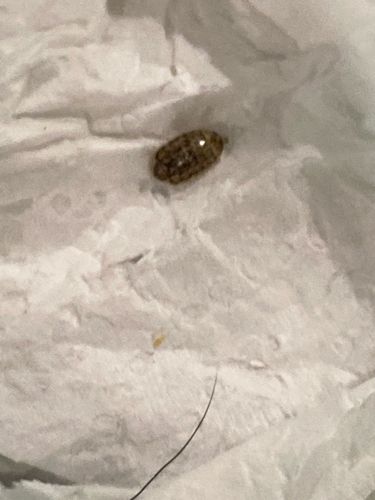
Carpet Beetle (likely Varied Carpet Beetle or Black Carpet Beetle larva)
Likely *Anthrenus verbasci* (Varied Carpet Beetle) or *Attagenus unicolor* (Black Carpet Beetle) at the larval stage. Precise identification to species from this image of a larva is difficult.
- Order & Family
- Order: Coleoptera, Family: Dermestidae
- Size
- Larvae typically range from 2mm to 5mm (.08 to .2 inches) in length, varying by species and stage of development. Adults are usually 2-3mm long.
Natural Habitat
Indoors, carpet beetles are commonly found in homes, museums, and warehouses. They infest carpets, rugs, upholstered furniture, clothing, blankets, and stored food products. Outdoors, they can be found in bird nests, animal carcasses, and in flowering plants where adults feed.
Diet & Feeding
Larvae feed on a wide variety of animal products, including wool, silk, fur, feathers, leather, pet food, dead insects, and museum specimens. They are also known to consume dried plant products like cereals and spices. Adults primarily feed on pollen and nectar.
Behavior Patterns
Adult carpet beetles are attracted to light and are often found near windows. Larvae avoid light and prefer to dwell in dark, undisturbed areas. Larvae are known to shed their skins multiple times as they grow, leaving behind these cast skins which can sometimes be mistaken for the beetles themselves. They are relatively slow-moving.
Risks & Benefits
Risks: Carpet beetle larvae are significant household and museum pests, causing damage to natural fibers (wool, silk, fur) and sometimes foodstuffs. While they do not bite or transmit diseases, some people can have allergic reactions to their larval hairs or shed skins, leading to skin irritation or respiratory issues. Benefits: In nature, they play a minor role in decomposition by feeding on dead organic matter.