
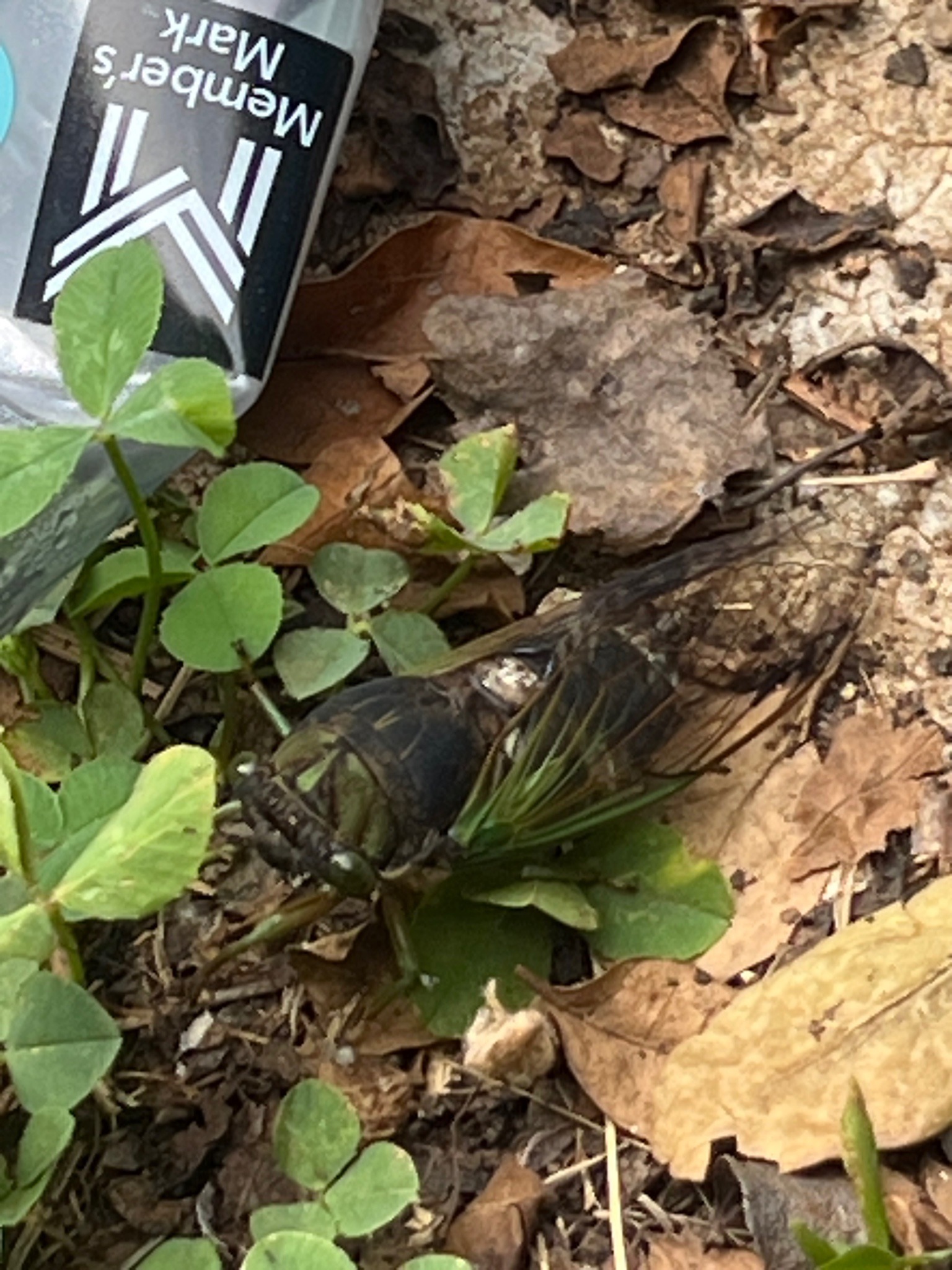
Community identification
Annual cicada
*Neocicada* sp. (likely; species-level identification is uncertain from the image)
- Order & Family
- Hemiptera, Cicadidae
- Size
- About 2.5–4 cm long, excluding the wings; wings are typically longer than the body.
Natural Habitat
Woodlands, forest edges, and landscaped areas, usually on or near trees and leaf litter. The nymphs live underground among plant roots.
Diet & Feeding
Nymphs suck fluids from plant roots underground. Adults drink xylem fluid from woody plants and generally cause little feeding damage.
Behavior Patterns
Adults emerge after several years underground, molt, and call to attract mates; males produce loud songs with tymbal organs. After mating, females deposit eggs in twigs, and adults die within weeks.
Risks & Benefits
Harmless to people: they do not bite or sting. Cicadas provide food for wildlife, aerate soil as nymphs, and contribute nutrients after dying; heavy emergences can slightly damage young branches.