
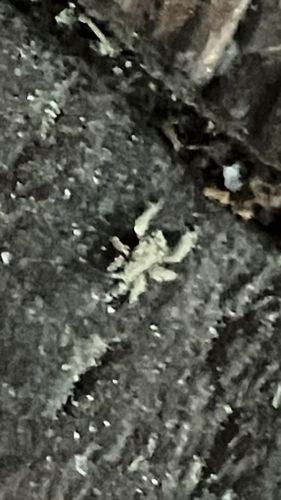
Crab Spider (Likely a Lichen or Bark Crab Spider)
Various genera within Thomisidae (e.g., Mecaphesa, Xysticus, Misumena, but identification to species from this image is difficult)
- Order & Family
- Order: Araneae, Family: Thomisidae
- Size
- Typically small to medium-sized; body length ranges from 3 mm to 10 mm, with females often larger than males.
Natural Habitat
Found on tree bark, lichen-covered surfaces, rocks, and occasionally on flowers. Their camouflage makes them difficult to spot in these environments.
Diet & Feeding
Mainly insects, including flies, bees, butterflies, and other small arthropods. They do not spin webs for catching prey, but rather lie in wait and ambush passing insects using their strong front legs.
Behavior Patterns
Ambush predators, often waiting motionless on bark, leaves, or other surfaces that blend with their camouflage. They rely on their cryptic coloration to surprise prey. Some undergo color changes to better match their surroundings. They are solitary and typically not aggressive towards humans.
Risks & Benefits
Risks: Generally harmless to humans. While they possess venom to subdue their prey, their fangs are small, and bites are rare and usually cause only mild, localized pain or itching, similar to a bee sting. Benefits: They are beneficial predators that help control populations of various insects, including some agricultural pests, contributing to natural pest control in ecosystems.