
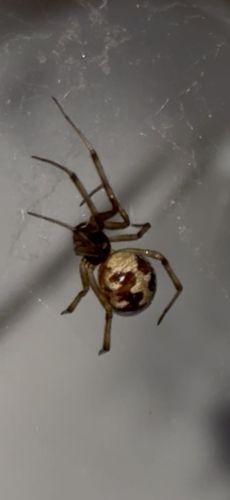
Noble False Widow Spider
Steatoda nobilis
- Order & Family
- Order: Araneae, Family: Theridiidae (Cobweb spiders or Comb-footed spiders)
- Size
- Females typically have a body length of 8-14 mm, with a leg span up to 35 mm. Males are smaller, usually 7-11 mm in body length.
Natural Habitat
Commonly found in and around human habitations, including houses, sheds, outbuildings, and gardens. They prefer sheltered, dark, and undisturbed locations such as cracks, crevices, behind furniture, and in corners.
Diet & Feeding
Their diet consists mainly of various insects and other small invertebrates that get caught in their webs. They have also been known to prey on other spiders.
Behavior Patterns
Noble false widows are primarily nocturnal hunters, building irregular, tangled webs, often in sheltered locations. They are known for their synanthropic nature, meaning they thrive in human-modified environments. Females are typically sedentary once a web is established, while males may wander in search of mates. They can be aggressive when disturbed or defending their web/egg sac.
Risks & Benefits
Risks: The noble false widow spider is capable of delivering a bite to humans, especially if provoked or accidentally pressed against the skin. While their venom is not considered life-threatening to healthy individuals, a bite can cause localized pain, swelling, redness, and sometimes more severe reactions such as nausea, headache, or malaise. These symptoms usually resolve within a few days. Benefits: Like most spiders, they play a role in controlling insect populations, including common household pests.