
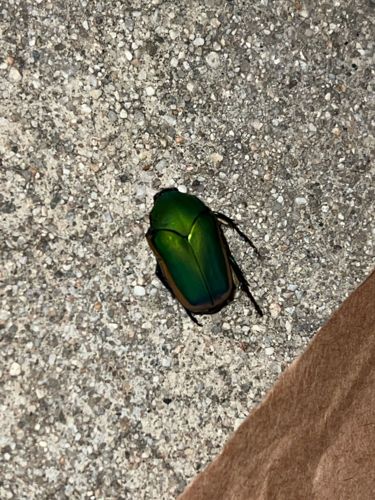
Figeater Beetle, Green June Beetle (often confused)
Cotinis mutabilis (Figeater Beetle), Cotinis nitida (Green June Beetle)
- Order & Family
- Coleoptera, Scarabaeidae
- Size
- 2.5 - 3.5 cm (1 - 1.4 inches) in length
Natural Habitat
Figeater beetles are common in arid and semi-arid regions of the southwestern US and northern Mexico, often found in urban gardens, orchards, and vineyards. Green June beetles are found in the eastern United States, often in cultivated areas like lawns, gardens, and fruit trees.
Diet & Feeding
Adults feed on ripe or fermenting fruits (figs, peaches, grapes, apples), sap, and sometimes flowers. Larvae (grubs) primarily feed on decaying organic matter in the soil, such as compost, mulch, and rotting wood. They can also feed on plant roots, especially if organic matter is scarce.
Behavior Patterns
Adults are active during the day, especially in warm weather, and are strong, clumsy fliers, often buzzing loudly. They are attracted to fermenting fruit. Larvae live underground and move by crawling on their backs. They overwinter as larvae and pupate in the soil.
Risks & Benefits
Potential risks include damage to ripe fruits and vegetables in gardens and orchards. While larvae primarily feed on decaying matter, which is beneficial for decomposition and soil aeration, they can occasionally damage plant roots, especially in drought conditions. They are generally not harmful to humans.