
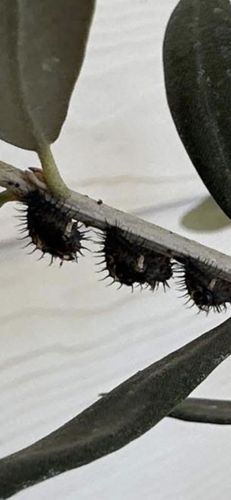
Community identification
Black Scale (Larvae/Adult)
Saissetia oleae
- Order & Family
- Order: Hemiptera, Family: Coccidae
- Size
- 3 mm to 5 mm in length
Natural Habitat
Commonly found on olive trees, citrus, and various ornamental shrubs in Mediterranean and tropical climates.
Diet & Feeding
Plant sap (phloem). These insects use piercing-sucking mouthparts to feed on the tender twigs and leaves of host plants.
Behavior Patterns
They are largely sedentary as adults, appearing as dark, hard bumps on stems. They excrete a sticky substance called honeydew while feeding, which can lead to the growth of black sooty mold.
Risks & Benefits
Risk: Heavy infestations can cause leaf drop, twig dieback, and reduced fruit production. Benefit: Provide a food source for natural predators like chalcid wasps and ladybugs.