
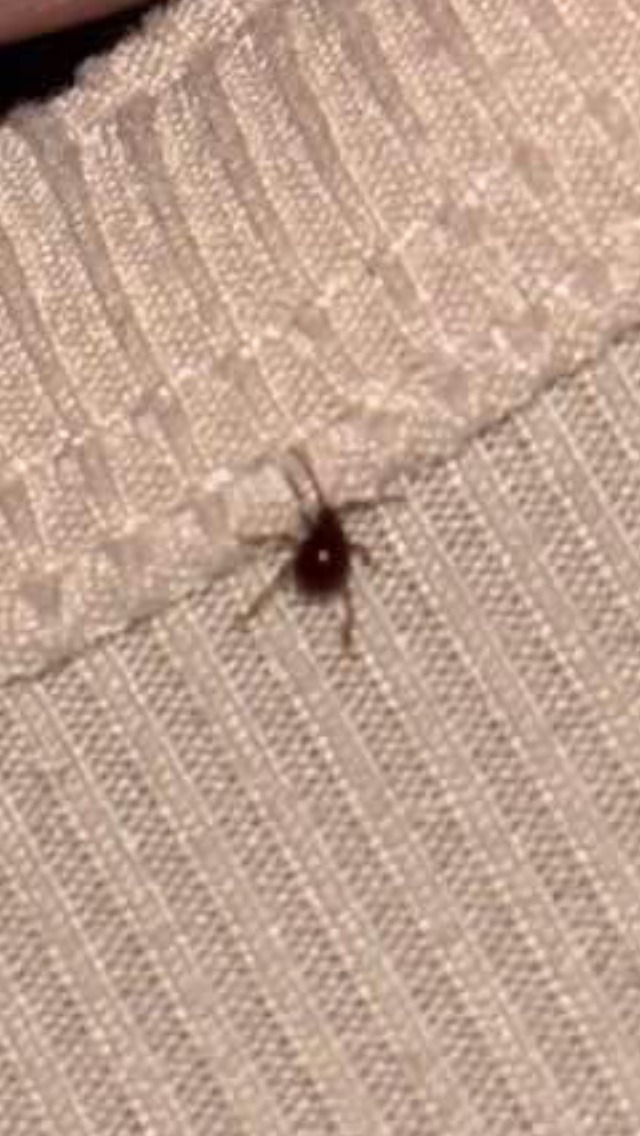
Tick (likely a soft tick or engorged hard tick)
Subclass Acari; species cannot be determined from this image
- Order & Family
- Order Ixodida; family uncertain
- Size
- Typically 1–6 mm unfed; engorged females can reach roughly 8–12 mm.
Natural Habitat
Ticks occur in leaf litter, tall grass, woodland edges, animal nests, and on host animals. This specimen is pictured on fabric, likely after contact with a host or environment.
Diet & Feeding
All active stages feed on blood from mammals, birds, reptiles, or amphibians. They attach with mouthparts and may remain feeding for hours to days.
Behavior Patterns
Ticks wait on vegetation or inhabit animal shelters, detecting hosts through heat, odor, and movement. Females often enlarge dramatically after feeding and then drop off to lay eggs.
Risks & Benefits
Some ticks transmit pathogens, including Lyme disease bacteria, rickettsiae, and viruses; remove promptly with fine-tipped tweezers and avoid crushing the body. They also serve as food for predators and contribute to ecosystem food webs.