
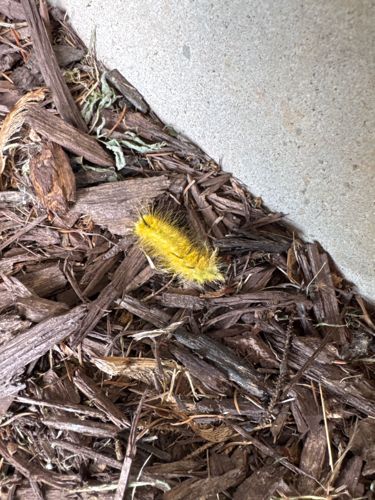
Yellow Woolly Bear Caterpillar
Spilosoma virginica (formerly Diacrisia virginica)
- Order & Family
- Lepidoptera (Moths and Butterflies), Erebidae (Arctiinae subfamily - Tiger Moths and Woolly Bears)
- Size
- Larvae (caterpillars) typically range from 1 to 2 inches (2.5 to 5 cm) in length when fully grown. Adult moths have a wingspan of about 1.5 to 2 inches (3.8 to 5 cm).
Natural Habitat
Commonly found in open fields, gardens, roadsides, and agricultural areas throughout North America. They thrive in areas with abundant low-growing vegetation.
Diet & Feeding
Polyphagous, feeding on a wide variety of herbaceous plants, including dandelions, plantains, clovers, sunflowers, corn, and sometimes garden vegetables. Adult moths feed on nectar.
Behavior Patterns
Woolly bear caterpillars overwinter as larvae and can survive freezing temperatures. They become active again in spring to feed and complete their development. When disturbed, they often curl up into a tight ball, protecting their softer underside with their spiny bristles. They are generally solitary.
Risks & Benefits
Potential risks: While generally harmless, the bristles (setae) of some woolly bear caterpillars can cause skin irritation or dermatitis in sensitive individuals if handled, though this species is less irritating than some others. Potential benefits: They are an important part of the food chain, serving as food for birds and other predators. As adults, they can act as pollinators to some extent.