
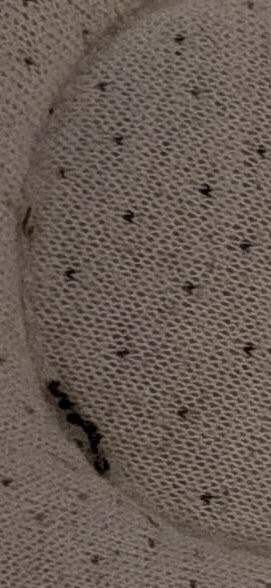
Fleas (likely cat fleas)
Ctenocephalides felis
- Order & Family
- Siphonaptera; Pulicidae
- Size
- About 1.5–3.3 mm long; laterally flattened and typically dark brown.
Natural Habitat
Adults live on cats, dogs, and other mammals; eggs, larvae, and pupae develop in carpets, bedding, upholstery, and soil. The image appears to show fleas or flea debris on fabric, though species-level identification from this photo is uncertain.
Diet & Feeding
Adults consume blood from mammals and occasionally birds. Larvae feed mainly on dried blood and organic debris in the environment.
Behavior Patterns
Wingless adults jump rapidly and hide in fur or fabric. Females lay eggs on hosts, which fall into the environment; development can accelerate in warm, humid conditions.
Risks & Benefits
Bites cause itching and allergic dermatitis, and fleas can transmit pathogens and parasites, including tapeworms. They have little meaningful ecological benefit in homes and should be controlled by treating both pets and indoor environments.