
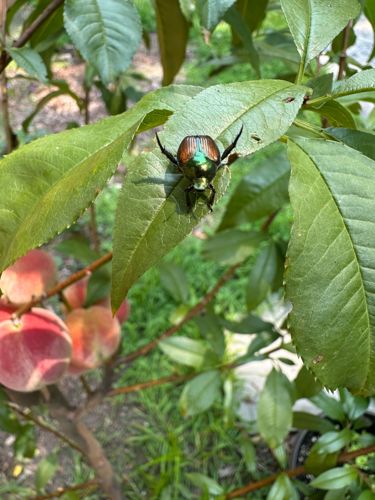
Japanese Beetle
Popillia japonica
- Order & Family
- Order: Coleoptera, Family: Scarabaeidae
- Size
- Adults are typically 10-15 mm (0.4-0.6 inches) in length.
Natural Habitat
Adults are commonly found on ornamental plants, fruit trees, vegetable gardens, and agricultural crops. Larvae live in the soil of lawns, pastures, and golf courses.
Diet & Feeding
Adults feed on the leaves, flowers, and fruits of a wide variety of plants (over 300 species), including roses, grapevines, fruit trees (like the peach tree in the image), and many ornamental plants. Larvae (grubs) feed on the roots of grasses, including turfgrass.
Behavior Patterns
Adult Japanese beetles are most active on warm, sunny days. They feed on plants by skeletonizing leaves, leaving only the veins. They are strong fliers and can travel significant distances. Larvae (grubs) live in the soil and feed on grass roots. The life cycle typically lasts one year, with adults emerging in early summer.
Risks & Benefits
Risks: Japanese Beetles are significant agricultural and horticultural pests. Both adults and larvae cause considerable damage to plants. Adults defoliate plants, reducing their photosynthetic capability and aesthetic value, and damaging fruits. Larvae damage turf, leading to brown patches and making the grass susceptible to other environmental stresses. Benefits: There are no significant benefits associated with Japanese Beetles; they are almost exclusively considered a pest species, especially in areas where they are invasive.