
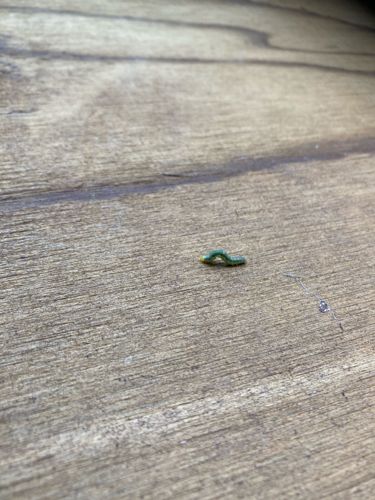
Inchworm (also known as Looper or Spanworm)
Various species within the family Geometridae (e.g., Paleacrita vernata, Alsophila pometaria)
- Order & Family
- Order: Lepidoptera, Family: Geometridae
- Size
- Larvae typically range from 1 to 3 cm (0.4 to 1.2 inches) in length, though some larger species can reach up to 5 cm (2 inches). The adult moths vary in wingspan, generally from 1.5 to 5 cm (0.6 to 2 inches).
Natural Habitat
Inchworms are found in various habitats where their host plants grow, including gardens, forests, fields, orchards, and urban green spaces. They are typically found on the leaves, stems, and branches of trees, shrubs, and herbaceous plants.
Diet & Feeding
Inchworms are primarily herbivorous, feeding on the leaves of plants. Their diet varies greatly depending on the specific species, but many are polyphagous, meaning they can feed on a wide variety of plant types. Some species are considered pests due to their feeding habits on agricultural crops or ornamental plants.
Behavior Patterns
Inchworms move by extending their front end, then bringing their hind end forward to meet it, creating a characteristic 'loop' or 'arch' with their body. This unique locomotion is due to the reduction or absence of prolegs (fleshy, leg-like appendages) in the middle segments of their abdomen. They are often found on plants, where they blend in with stems or leaves, sometimes holding perfectly still and upright to mimic a twig for camouflage. They can also drop from plants by spinning a silken thread.
Risks & Benefits
Potential risks include being agricultural or horticultural pests. Large infestations can defoliate trees and crops, causing economic damage. However, they are also an important part of the food chain, serving as a food source for birds, parasitic wasps, and other predators. The adult moths are pollinators for some plants.