
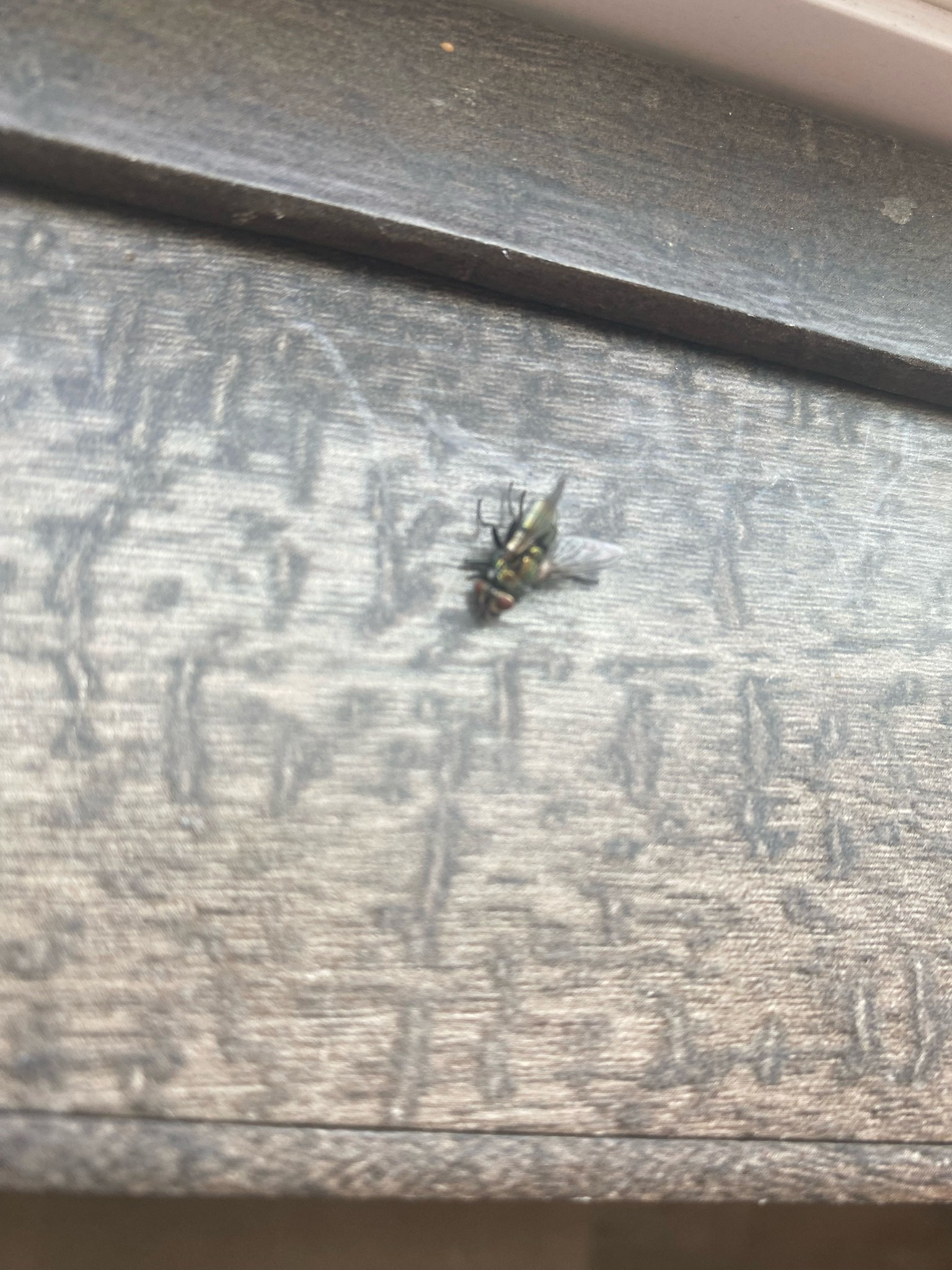
Community identification
Common Green Bottle Fly
Lucilia sericata
- Order & Family
- Order: Diptera; Family: Calliphoridae
- Size
- 10 - 14 mm in length
Natural Habitat
Widely distributed worldwide in temperate and tropical regions, commonly found near decaying organic matter, garbage, and livestock.
Diet & Feeding
Adults feed on nectar, honeydew, and liquid from decaying matter. Larvae (maggots) consume carrion, feces, and necrotic tissue.
Behavior Patterns
Diurnal and highly active; known for their fast flight and the loud buzzing sound they make. Females lay eggs on decomposing meat or wounds, where larvae develop rapidly.
Risks & Benefits
Risks include the transmission of pathogens such as Salmonella and E. coli to humans and food. Benefits include ecological decomposers and their use in forensic entomology to estimate time of death, as well as controlled 'maggot therapy' for cleaning necrotic wounds.