
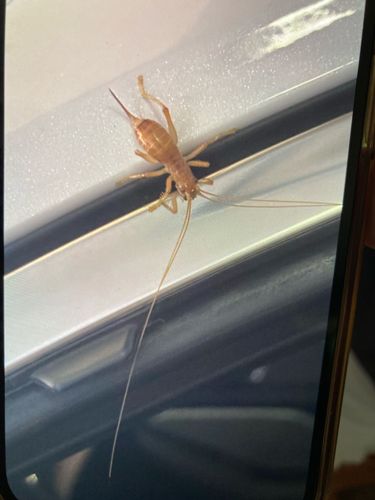
Camel Cricket or Cave Cricket
Various genera within Rhaphidophoridae, e.g., Ceuthophilus (North American Camel Crickets)
- Order & Family
- Order: Orthoptera, Family: Rhaphidophoridae
- Size
- Typically 1/2 to 1 1/2 inches (1.2 to 3.8 cm) in body length, not including their long antennae and legs.
Natural Habitat
They are commonly found in cool, dark, and damp environments such as caves, basements, cellars, crawl spaces, sheds, garages, and under logs or stones outdoors. They are attracted to moisture.
Diet & Feeding
Camel crickets are omnivores and scavengers. They feed on a wide variety of organic matter, including decaying plants, fungi, other insects (dead or alive), fabric, and even wood.
Behavior Patterns
Camel crickets are nocturnal and are known for their jumping ability when startled. They do not chirp like other crickets. They prefer dark, damp environments and will often seek shelter in basements, crawl spaces, and sheds, especially during colder months or dry periods.
Risks & Benefits
Potential Risks: Primarily a nuisance pest when found indoors in large numbers. While they do not bite or sting, they can damage household items like fabrics, wood, and plants if other food sources are scarce. They can be disturbing due to their appearance and erratic jumping. Potential Benefits: Outdoors, they play a role in decomposition by feeding on decaying organic matter.