
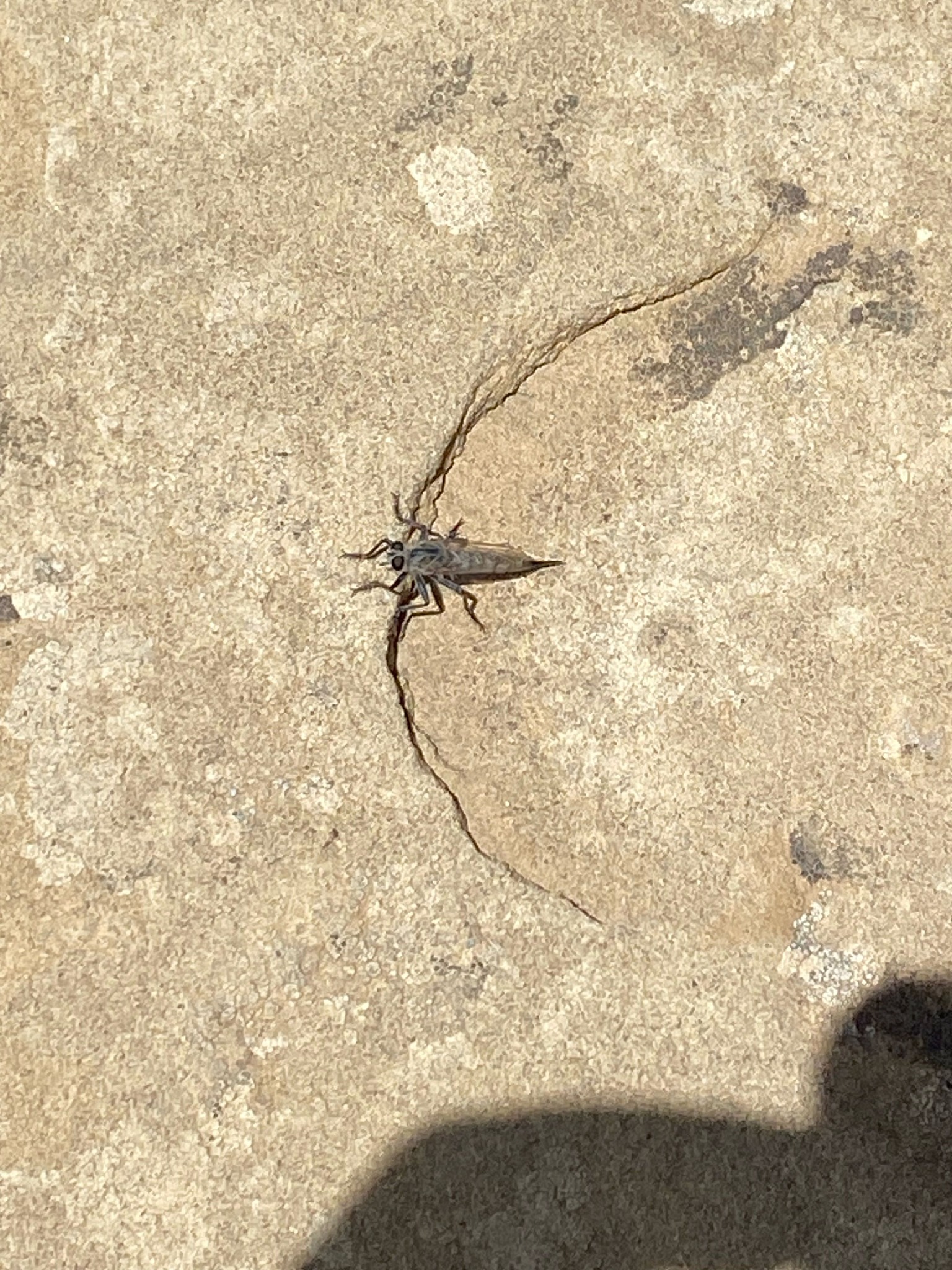
Community identification
Robber Fly
Asilidae (family)
- Order & Family
- Diptera: Asilidae
- Size
- 3 mm to 50 mm (average 1 cm to 1.5 cm for most common garden species)
Natural Habitat
Open areas with plenty of sunlight such as grasslands, meadows, forest edges, and gardens where prey is abundant.
Diet & Feeding
Aggressive predators; they eat other insects including bees, wasps, flies, dragonflies, and grasshoppers by catching them in mid-air.
Behavior Patterns
Known for their aerial agility, they perch in sunny spots to ambush passing prey. They inject saliva containing neurotoxic and proteolytic enzymes to paralyze victims.
Risks & Benefits
Highly beneficial to the ecosystem as natural pest controllers; they can deliver a painful bite to humans if handled, but they are not aggressive toward people.