
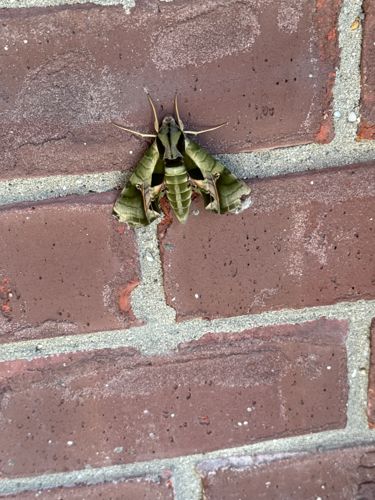
Pandora Sphinx Moth
Eumorpha pandorus
- Order & Family
- Order: Lepidoptera, Family: Sphingidae
- Size
- Wing Span: 8-11 cm (3-4.5 inches)
Natural Habitat
Woodlands, suburban areas, gardens, vineyards, and other areas where their host plants (grapes and Virginia creeper) are abundant. They are typically found in eastern North America.
Diet & Feeding
Adult Pandora Sphinx Moths feed on nectar from various flowers, often preferring deep-throated flowers that accommodate their long proboscis. Caterpillars feed on the leaves of their host plants, primarily grapevines (Vitis species) and Virginia creeper (Parthenocissus quinquefolia).
Behavior Patterns
Adults are active flyers, especially at dusk and during the night. They are known for their rapid, sometimes hummingbird-like flight. The larvae (caterpillars) are typically found on their host plants, often camouflaged and feeding voraciously. When disturbed, the caterpillar may rear its head and thorax, giving it a sphinx-like appearance, which is where the family Sphingidae gets its common name (sphinx moths).
Risks & Benefits
Risks: The caterpillars can be considered agricultural pests in vineyards due to their feeding on grapevines, potentially defoliating plants if present in large numbers. Benefits: As adults, they act as important pollinators for various flowering plants. Their caterpillars are also a food source for birds and other insectivores, contributing to the food web. They are not harmful to humans.