
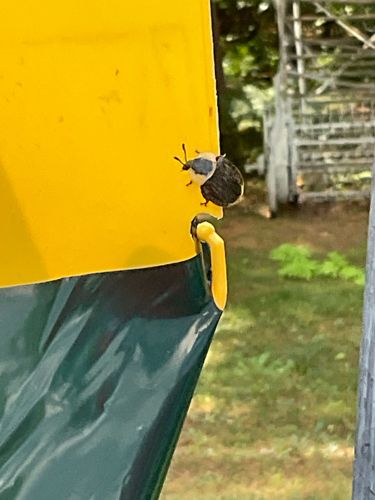
Japanese Beetle
Popillia japonica Newman
- Order & Family
- Order: Coleoptera, Family: Scarabaeidae
- Size
- Adults typically measure 8-11 mm (0.3-0.4 inches) in length.
Natural Habitat
Japanese beetles typically inhabit temperate climates. Adults are found in gardens, agricultural fields, nurseries, and urban landscapes where their host plants are abundant. Larvae (grubs) are found in the soil, particularly in lawns and pastures.
Diet & Feeding
Adult Japanese beetles are polyphagous, feeding on the leaves, flowers, and fruits of over 300 species of plants, including roses, grapes, maple, linden, and turfgrass. Larvae (grubs) feed on the roots of turfgrass and other plants.
Behavior Patterns
Adult Japanese beetles are active during the day, feeding on a wide variety of plants. They are strong fliers and aggregate in large numbers on preferred host plants, releasing aggregation pheromones to attract more beetles. Larvae (grubs) live underground and feed on plant roots.
Risks & Benefits
Potential risks: Japanese beetles are significant agricultural and horticultural pests, causing widespread damage to crops, ornamental plants, and lawns. Their feeding can skeletonize leaves, destroy flowers, and weaken plants. Potential benefits: In some natural ecosystems, they may play a minor role in decomposition or as a food source for other animals, but their invasive nature and pest status far outweigh any potential benefits in affected regions.