
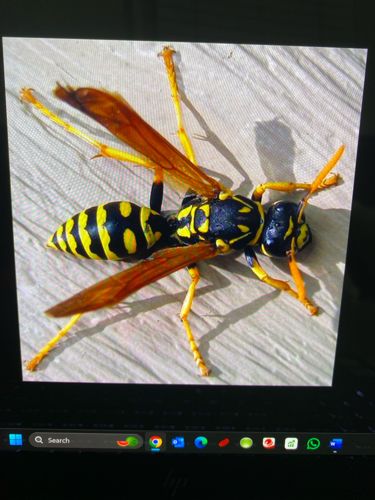
Yellowjacket Wasp
Vespula spp. or Dolichovespula spp. (There are many species within these genera commonly referred to as yellowjackets.)
- Order & Family
- Order: Hymenoptera, Family: Vespidae (subfamily Vespinae or Vespinae)
- Size
- Typically 10-16 mm (0.4-0.6 inches) in length
Natural Habitat
Yellowjackets build nests in various locations, including underground in abandoned rodent burrows, in tree cavities, under eaves, within wall voids of buildings, or in dense bushes. They are commonly found in temperate regions worldwide, often near human habitation where food sources are plentiful.
Diet & Feeding
Adult yellowjackets feed on nectar, fruit juices, and other sugary substances. They also hunt insects, often caterpillars and flies, to feed their larvae, which require protein to develop. They are opportunistic scavengers and are attracted to human food.
Behavior Patterns
Yellowjackets are social insects living in colonies that can number in the thousands. They are most active during late summer and early fall when their colonies reach peak size. Workers forage for food and care for the queen and larvae. They can be aggressive, especially when their nest is threatened or when foraging for food that attracts them (e.g., sugary drinks, meat).
Risks & Benefits
Risks: Yellowjackets are known for their painful stings. Unlike bees, they can sting multiple times. Their stings can cause localized pain, swelling, and itching. For individuals allergic to wasp venom, stings can lead to severe anaphylactic reactions, which can be life-threatening. Benefits: As predators, yellowjackets help control populations of other insects, including some agricultural pests. They also act as pollinators to a minor extent when feeding on nectar.